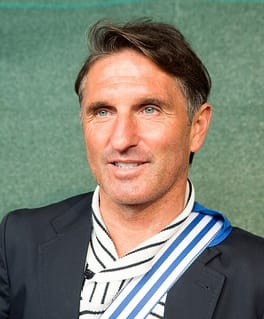
Photo: Frank Schwichtenberg / CC BY-SA 3.0 (source: Wikimedia Commons)
Bruno Labbadia, born on February 8, 1966 in Darmstadt, Darmstadt Government Region, Germany, is an association football player and association football coach. As of 2026, Bruno Labbadia is 60 years old. Awards on record include Goal of the Month (1991, 1992, 1994). The listed height is 178 cm.
My Take
Labbadia fascinates me as a man who got two careers out of one game. With an Italian surname and a Darmstadt upbringing, he scored his way to a Bundesliga title with Bayern and a cup with Kaiserslautern, even collecting Goal of the Month honors three times. Then he reinvented himself entirely as a manager, trading the thrill of finishing for the patience of teaching. I love that arc. Strikers who understand the joy of scoring often make the most demanding, detail-obsessed coaches, and there is an Aquarian individuality to how he has carved his own path through German football.
This take was written by generative AI, one per person, from publicly reported facts (editorial policy). It is a reading of the record, not reporting.
1. Profile
- Name (English)
- Bruno Labbadia
- Name (Japanese)
- ブルーノ・ラッバディア
- Reading
- ぶるーの・らっばでぃあ
- Born
- February 8, 1966 (age 60)
- Origin
- Darmstadt, Darmstadt Government Region, Germany
- Height
- 178 cm
- Occupation
- association football player / association football coach
- Zodiac / Chinese zodiac
- Aquarius / Horse
2. Background
Awards & achievements
- 1991 Goal of the Month
- 1992 Goal of the Month
- 1994 Goal of the Month
3. Links
4. About this entry
Tags
- Last updated
Facts are limited to publicly available information up to 2024; non-public or unconfirmed items are omitted. English text is machine-assisted (facts translated by Sonnet, "My Take" written by Opus 4.8). The Japanese page is the source of record.
Frequently asked questions
When was Bruno Labbadia born?
Born February 8, 1966 (age 60).
Where is Bruno Labbadia from?
Bruno Labbadia is from Darmstadt, Darmstadt Government Region, Germany.
What does Bruno Labbadia do?
Bruno Labbadia works as association football player, association football coach.
How tall is Bruno Labbadia?
Bruno Labbadia is 178 cm.
Association football player — see all → · Association football coach — see all → · More people from Germany →