Sakura's Warmth, Sophie's Voice: The Quiet Steel of Chieko Baishō
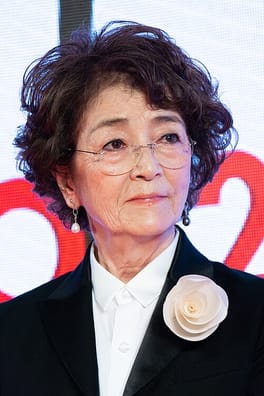
A Japan Academy Prize for Best Actress, the Medal with Purple Ribbon, and a long list of theater honors leave no doubt about her ability. But her real worth lies somewhere that no count of awards can fully measure.
Born in Tokyo
Chieko Baishō was born in Tokyo in 1941, under the sign of Cancer in the Year of the Snake. At 159 centimeters she is small in stature, yet she carries a presence powerful enough to change the air of a scene the moment she appears.
Actress, voice actress, singer, recording artist: even the list of titles conveys the breadth of her work. Refusing to be confined to any one field, her career moves across multiple forms of expression and overlaps with the very history of postwar Japanese entertainment.
As Sakura, the Heart of Tora-san
No account of Baishō is complete without her role as Sakura in the Otoko wa Tsurai yo series. Repeatedly thrown into chaos by her wandering brother Tora-san, she never abandons him, watching over him with steady warmth. That she sustained this role for so long says everything about her depth as an actress.
Sakura's appeal is not mere kindness. It is the firm core beneath that kindness that lets audiences relax the instant she appears, as if to say, "Ah, we're home." As the embodiment of family warmth, she has been loved by generation after generation.
The Character in Sophie's Voice
The other role that carried her name far and wide is Sophie in Studio Ghibli's Howl's Moving Castle. Moving between youth and old age within a single part, she pulled off this demanding role with nothing but her gentle, lived-in voice.
Voice work lets a person's character seep through directly. Hers is gentle, deep, and quietly soaking into the listener's heart, its persuasiveness supported by the expressive power she honed as a singer. To carry an entire animated film on voice alone is no ordinary feat.
A Record That Speaks for Itself
Baishō's journey is studded with honors. It begins with the Elan d'Or New Talent Prize in 1962, followed by the Blue Ribbon Award for Best Supporting Actress in 1976, the Japan Academy Prize for Best Actress in 1981, the Tanaka Kinuyo Award in 1987, and the Medal with Purple Ribbon in 2005. Add the Kikuta Kazuo Theater Award and a Mainichi Film Award for Best Actress, and her recognition spans both film and stage.
From a newcomer prize to an Academy Prize to a national medal: the simple fact that she has been honored at the top for so long is the most eloquent proof of how real her talent is.
She never makes a scene, and yet she is loved without end. Chieko Baishō is the kind of figure who fully deserves the name of a true grande dame of cinema. Sakura's warmth, Sophie's voice, and the steel running quietly beneath them have all been etched, over many years, into countless memories.
People do not merely admire her. They feel close to her, genuinely fond of her. That warmth may be the greatest legacy this actress has ever left behind.