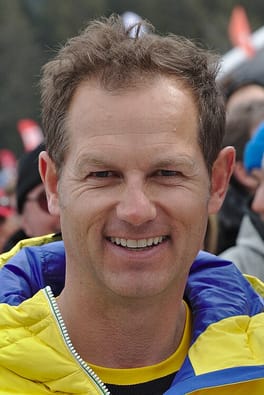
Photo: Clément Bucco-Lechat / CC BY-SA 3.0 (source: Wikimedia Commons)
Edgar Grospiron was born on March 17, 1969 in Saint-Julien-en-Genevois, Haute-Savoie, France. Edgar Grospiron is credited as a freestyle skier. That works out to 57 years old in 2026. Awards on record include Knight of the Legion of Honour (1992).
My Take
Grospiron is the kind of champion I find genuinely romantic: a kid from an Alpine corner of Haute-Savoie who won moguls gold at his home Albertville Games in 1992, then took bronze in Lillehammer two years later. Winning Olympic gold in front of your own country is about the highest pressure a sport can offer, and he delivered. What I admire even more is the second act, leading the French youth team and steering the Annecy Olympic bid. A Legion of Honour recipient who stayed devoted to the movement that made him. That blend of mountain-born nerve and lasting service is exactly my kind of hero.
This take was written by generative AI, one per person, from publicly reported facts (editorial policy). It is a reading of the record, not reporting.
1. Profile
- Name (English)
- Edgar Grospiron
- Name (Japanese)
- エドガー・グロスピロン
- Reading
- えどがー・ぐろすぴろん
- Born
- March 17, 1969 (age 57)
- Origin
- Saint-Julien-en-Genevois, Haute-Savoie, France
- Occupation
- freestyle skier
- Zodiac / Chinese zodiac
- Pisces / Rooster
2. Background
Awards & achievements
- 1992 Knight of the Legion of Honour
3. Links
- Official sitehttp://www.grospiron.net/
- Wikipedia (English)https://en.wikipedia.org/wiki/Edgar%20Grospiron
- Wikipedia (Japanese)https://ja.wikipedia.org/wiki/%E3%82%A8%E3%83%89%E3%82%AC%E3%83%BC%E3%83%BB%E3%82%B0%E3%83%AD%E3%82%B9%E3%83%94%E3%83%AD%E3%83%B3
- Wikidatahttps://www.wikidata.org/wiki/Q978538
4. About this entry
Tags
- Last updated
Facts are limited to publicly available information up to 2024; non-public or unconfirmed items are omitted. English text is machine-assisted (facts translated by Sonnet, "My Take" written by Opus 4.8). The Japanese page is the source of record.
Frequently asked questions
When was Edgar Grospiron born?
Born March 17, 1969 (age 57).
Where is Edgar Grospiron from?
Edgar Grospiron is from Saint-Julien-en-Genevois, Haute-Savoie, France.
What does Edgar Grospiron do?
Edgar Grospiron works as freestyle skier.