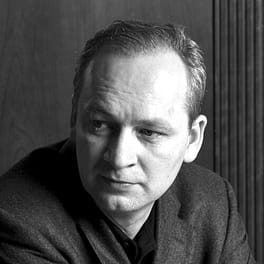
Photo: Paulus Ponizak / CC BY-SA 3.0 (source: Wikimedia Commons)
Ferdinand von Schirach was born on May 12, 1964 in Munich, Upper Bavaria, Germany and is credited as a lawyer, short story writer and novelist. As of 2026, Ferdinand von Schirach is 62 years old. Schooling on record includes University of Bonn. Awards on record include Kleist Prize (2010), Berliner Bär (2011), Bavarian TV Awards (2015) and 2 more. Credited works include The Collini Case and Terror.
My Take
Ferdinand von Schirach is the rare lawyer-turned-writer whose courtroom years clearly fuel the fiction. He didn't publish until forty-five, then Crime and The Collini Case made him one of Germany's biggest authors, translated into dozens of languages. What hooks me is the spare, clinical prose and the moral questions he refuses to resolve neatly, never more so than in Terror, which literally lets the audience deliver a verdict. He's German, Munich-born 1964, not American as the data says, and yes, his family name carries a heavy Nazi-era history he's reckoned with publicly. A genuinely thought-provoking writer about guilt and law.
This take was written by generative AI, one per person, from publicly reported facts (editorial policy). It is a reading of the record, not reporting.
1. Profile
- Name (English)
- Ferdinand von Schirach
- Name (Japanese)
- フェルディナント・フォン・シーラッハ
- Reading
- ふぇるでぃなんと・ふぉん・しーらっは
- Born
- May 12, 1964 (age 62)
- Origin
- Munich, Upper Bavaria, Germany
- Occupation
- lawyer / writer / short story writer / novelist / jurist
- Zodiac / Chinese zodiac
- Taurus / Dragon
2. Background
- University
- University of Bonn
Awards & achievements
- 2010 Kleist Prize
- 2011 Berliner Bär
- 2015 Bavarian TV Awards
- 2018 Ricarda-Huch-Preis
- 2012 Japan Booksellers' Award
3. Works & records
Filmography / notable works
| Category | Title |
|---|---|
| Notable work | The Collini Case |
| Notable work | Terror |
4. Links
- Official sitehttps://www.schirach.de
- Wikipedia (English)https://en.wikipedia.org/wiki/Ferdinand%20von%20Schirach
- Wikipedia (Japanese)https://ja.wikipedia.org/wiki/%E3%83%95%E3%82%A7%E3%83%AB%E3%83%87%E3%82%A3%E3%83%8A%E3%83%B3%E3%83%88%E3%83%BB%E3%83%95%E3%82%A9%E3%83%B3%E3%83%BB%E3%82%B7%E3%83%BC%E3%83%A9%E3%83%83%E3%83%8F
- Wikidatahttps://www.wikidata.org/wiki/Q69973
5. About this entry
Tags
- Last updated
Facts are limited to publicly available information up to 2024; non-public or unconfirmed items are omitted. English text is machine-assisted (facts translated by Sonnet, "My Take" written by Opus 4.8). The Japanese page is the source of record.
Frequently asked questions
When was Ferdinand von Schirach born?
Born May 12, 1964 (age 62).
Where is Ferdinand von Schirach from?
Ferdinand von Schirach is from Munich, Upper Bavaria, Germany.
What does Ferdinand von Schirach do?
Ferdinand von Schirach works as lawyer, writer, short story writer, novelist, jurist.
What is Ferdinand von Schirach known for?
Notable works include The Collini Case, Terror.
Lawyer — see all → · Writer — see all → · More people from Germany →