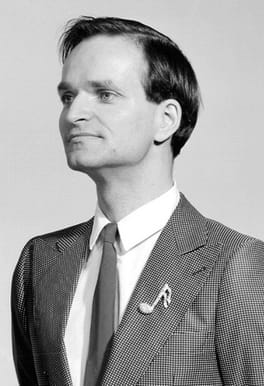
Photo: Maurice Seymour Studio - New York / Public domain (source: Wikimedia Commons)
Florian Schneider was credited as a university teacher, singer and songwriter. Florian Schneider was born in Kattenhorn, Freiburg Government Region, Germany on April 7, 1947. Death is recorded on April 30, 2020, at the age of 73.
My Take
Florian Schneider, who passed away in 2020, is to me one of the true architects of modern music. As a co-founder of Kraftwerk, he helped invent the template that hip-hop, techno, and synth-pop all stand on. I find it remarkable how the German pioneer treated the flute and electronics with the same experimental curiosity, eventually building robotic, machine-like soundscapes that felt like the future arriving early. He left Kraftwerk in 2008 after decades at its core. What strikes me most is his reclusiveness, he let the work speak rather than his persona. Without him, the entire electronic landscape would sound different. A quiet revolutionary.
This take was written by generative AI, one per person, from publicly reported facts (editorial policy). It is a reading of the record, not reporting.
1. Profile
- Name (English)
- Florian Schneider
- Name (Japanese)
- フローリアン・シュナイダー
- Reading
- ふろーりあん・しゅないだー
- Born
- April 7, 1947 – April 30, 2020
- Origin
- Kattenhorn, Freiburg Government Region, Germany
- Occupation
- university teacher / singer / songwriter / record producer / composer
- Zodiac / Chinese zodiac
- Aries / Boar
2. Links
3. About this entry
Tags
- Last updated
Facts are limited to publicly available information up to 2024; non-public or unconfirmed items are omitted. English text is machine-assisted (facts translated by Sonnet, "My Take" written by Opus 4.8). The Japanese page is the source of record.
Frequently asked questions
When was Florian Schneider born?
Born April 7, 1947.
When did Florian Schneider die?
Died April 30, 2020, aged 73.
Where was Florian Schneider from?
Florian Schneider was from Kattenhorn, Freiburg Government Region, Germany.
What did Florian Schneider do?
Florian Schneider worked as university teacher, singer, songwriter, record producer, composer.
University teacher — see all → · Singer — see all → · More people from Germany →