The 209-Centimeter Spine: How Giant Baba Carried an Era on His Shoulders
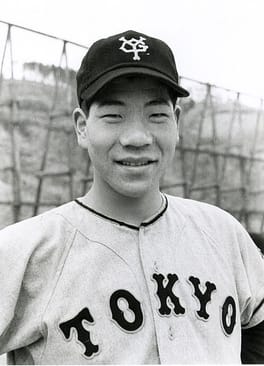
In Sanjo, a snowbound town in Niigata Prefecture, a boy was born who would one day become a figure that, as the saying goes, "everyone in Japan knew." The first clue was, above all, his sheer body. Two hundred and nine centimeters tall. Standing beside him, anyone had to crane their neck just to meet his eyes. He was, in the most literal sense, a giant beyond all ordinary measure.
But it was not his size alone that made him a legend. He moved from the pitcher's mound to the wrestling ring, built an organization from nothing, and carried its weight for the rest of his life. That steadiness of his back is what lifted Giant Baba into a symbol of the Showa era.
This is the story of a huge man who began as a baseball pitcher and ended as a wrestling legend.
The Oversized Boy from Sanjo
The man known as Giant Baba was born on January 23, 1938, in Sanjo, Niigata Prefecture. His zodiac sign was Aquarius, his Chinese zodiac the Tiger. The son of a greengrocer, he was the ace of the baseball team at Sanjo Jitsugyo High School. And one fact is beyond dispute: his body was already exceptional from a young age.
The frame that would eventually reach 209 centimeters made him an extraordinary presence in postwar Japanese society. For him, though, that body was also his first ticket to the wider world. From a small provincial town, carrying nothing but his size, he stepped onto the public stage.
From the Mound to the Ring
It may come as a surprise, but Baba's career began in baseball. He stood on the mound as a professional pitcher, and balls thrown down from those long limbs were surely a sensible weapon given his build.
Yet his true place was waiting elsewhere. The shift from baseball to professional wrestling is what defined his life. From the trade of a pitcher to a combat world where bodies collide in the ring, it was a leap so large it might be called a change of fields entirely. And it was here, in wrestling, that Baba carved his name into history. Few careers illustrate so vividly the idea that you never know where life will turn.
A Legend in Every Living Room
As a professional wrestler, Baba quickly became a name known throughout Japan. In an age when television had reached every household, his enormous frame and distinctive moves became a familiar fixture of the living room. The blows delivered from that great body drew cheers from children and adults alike, gathered before the screen.
He was not merely a strong giant. He was a symbol that lodged in viewers' memories, a name passed down across generations. The boy from a small Niigata town had become, somewhere along the way, one of the defining faces of Japanese professional wrestling.
The Shoulders That Carried an Organization
Baba's greatness did not stop at the ring. He built All Japan Pro Wrestling from the ground up and supported its banner throughout his life. He was both a competitor and the businessman leading the organization.
Gathering people, arranging shows, keeping an organization running, that is a pressure entirely different from honing one's technique. Those enormous shoulders bore not only opposing wrestlers but the very survival of an entire promotion. Strength and the nerve of a true businessman: because he possessed both, he became something more than a star athlete. That achievement was later honored with his induction into the Wrestling Observer Newsletter Hall of Fame.
On January 31, 1999, Giant Baba passed from this world. Yet his name endures even now, remembered as a symbol of the Showa era.
A body of 209 centimeters, too large to fit any human measure. What it held was the unshakable core of a man who rose from the provinces to become a giant known to the world. A life that began as a pitcher and closed as a legend speaks, more eloquently than anything, to how impossible it is to know where life's turning point lies in wait.