The Man Who Sets Stones One by One: Ichiro Ozawa, Half a Century Reading Japanese Politics
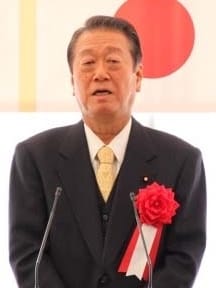
Open almost any chapter of Japan's postwar political history and one name keeps reappearing: Ichiro Ozawa. Born on May 24, 1942, in Shitaya Ward, Tokyo Prefecture, he studied economics at Keio University before stepping into politics—and has stood at the very center of Nagatacho, Japan's political district, for more than half a century since.
He has been called a "destroyer." If a party no longer suited him, he would simply break it apart and build a new one. Yet behind that reputation stands a strategist who, more than almost anyone, genuinely chased the one stubborn question of Japanese politics: real change of government. He is not the loud, camera-loving type. He moves like a Go player, setting stones down quietly, one at a time, his depth impossible to read.
Opinions split hard on him. But the sheer staying power to remain on the front line this long is, whatever you make of the man, the real thing.
From Keio to Nagatacho
Ichiro Ozawa was born in Shitaya Ward in Tokyo Prefecture, an old district of the city. He studied at the Faculty of Economics of Keio University, and after graduating he entered politics while still young.
A career spent inside the political arena from his twenties is, in itself, a story. At an age when most people are still finding their footing in working life, he was already in the thick of national maneuvering. A man trained early to read the next move tends to become a long-distance runner—and the decades that followed proved exactly that.
The "Destroyer"
One nickname followed Ozawa everywhere: the "destroyer." He refused to stay within existing frameworks, and when he judged it necessary, he would remake an entire party. That boldness was often told as a story of demolition.
But there is another way to read it. He did not break things merely to break them; he was trying, in earnest, to build a country where power could actually change hands. In a political landscape where a single arrangement had stayed fixed for so long, moving that seat was his consistent theme. The word "strongman" was, in his case, another name for that obstinacy.
The Quiet Strategist
You cannot describe Ichiro Ozawa without his peculiar quietness. He is not the kind of politician who delivers flashy speeches before the cameras. He speaks sparingly and lays his groundwork behind the scenes, one move at a time.
That depth of calculation, that unreadable quality, was both his greatest weapon and his greatest mystery. What was he thinking? No one could easily tell—which is precisely why those around him both feared and relied on him. On the vast Go board that is Nagatacho, he was always watching the whole board at once.
Recognition Across Borders
Ozawa's name does not stop at Japan's shores. He was awarded the Grand Cross of the Order of the Sun of Peru, an honor reserved for distinguished foreign figures—one small sign that his presence has been recognized beyond his country's borders.
That a long-serving domestic politician received such a decoration from abroad speaks quietly to the breadth of his work and the weight of the years behind it.
The anecdotes—that he would remake a whole party if it displeased him—tend to take on a life of their own. But underneath them is the obstinacy of a man who tried harder than anyone to move the currents of power in Japan.
An unreadable strategist whose mind no one can fully see into. Opinions about him will keep dividing. And yet the simple fact of standing on the front line for over half a century forces a kind of respect, whatever your verdict. In the February 2026 general election, after nineteen wins, he lost his seat for the first time. Even so, somewhere on the board, perhaps, Ichiro Ozawa is still deciding where to set the next stone.