From Matsue to World No. 4: Kei Nishikori and the Craftsman Who Rewrote "Impossible"
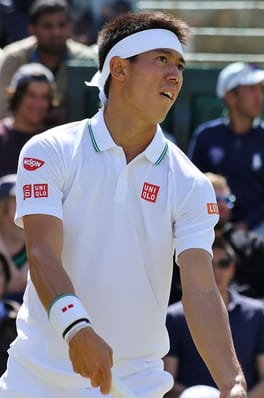
For a long time, the idea of a Japanese man competing at the very top of tennis was little more than a daydream. There was the wall of physique, the wall of history, and above all the invisible wall of having no precedent. Before Kei Nishikori, that ceiling was simply assumed.
A boy born in Matsue, Shimane crossed the ocean alone at thirteen and eventually stood on the final court of the US Open. He climbed to World No. 4 and hung an Olympic bronze around his neck. Each number he built up quietly rewrote what the next generation would consider possible.
This is the story of a craftsman who took on the world not with flash, but with steadiness — not with brute force, but with brains and technique.
Thirteen, Crossing the Ocean Alone
Kei Nishikori was born on December 29, 1989, in Matsue, Shimane.
His turning point came early. In 2003, selected as a scholarship player by the Masaaki Morita Tennis Fund, Nishikori traveled at just thirteen years old to the IMG Academy in Florida. Far from home, in a place where the language and culture were foreign, he staked his life on tennis alone. It was an enormous decision for a child, and he embraced it without hesitation.
He graduated from Aomori Yamada High School and never attended university. His classroom was always the court.
A Tour Title at Eighteen
Nishikori turned professional in 2007. The very next year, in 2008, he won his first ATP Tour title at the Delray Beach International Tennis Championships. Winning a tour title at just eighteen was a striking calling card.
It was the moment an unknown young player burst onto the world stage. Talent that had been spotted and nurtured answered with unmistakable results, and from there a long journey across the world tour began.
2014: A Country Awake at 3 A.M.
In 2012 he won the Rakuten Japan Open, reaching the summit before a home crowd. But the year that carved his name into history was 2014.
At the US Open men's singles, Nishikori beat one contender after another until he stood in the final — the first Asian man in history to reach a Grand Slam singles final. He finished runner-up, yet the frenzy of an entire country awake in the middle of the night, glued to their screens, is still talked about today.
The following year, in 2015, he reached World No. 4, the highest ranking ever achieved by an Asian male player. Against opponents who relied on sheer size, he fought back with precise footwork and a vicious backhand. He climbed not by power but by intelligence and craft — a victory shaded with a distinctly Japanese pride.
A Bronze Medal and the Will to Return
At the 2016 Rio Olympics, Nishikori won the bronze medal in men's singles — Japan's first Olympic tennis medal in 96 years. A player contending at the very top of the world had now etched his name onto the Olympic podium.
His career, however, was anything but smooth sailing. In 2019, right elbow surgery kept him out for the rest of the season. Each time injury brought him to tears, he quietly faced his rehabilitation and clawed his way back onto the court, again and again. That stubborn will was the very core of who Kei Nishikori was.
Off the court, he married Ako Mitsuki in December 2020, and the following year he announced they were expecting their first child. Beyond tennis, he had begun walking into a new chapter of life.
The Legacy of the One Who Opened the Road
In 2026, Nishikori plans to retire. The end of a long journey is now drawing quietly near.
What he leaves behind is more than trophies and ranking numbers. He single-handedly shattered the prevailing belief that a Japanese man could never reach the top of tennis. Because he set the precedent, the next generation can aim for the world as something normal rather than impossible.
If you lack size, make up for it with brains and technique. If injury knocks you down, simply rise again. Nishikori's path teaches us that power alone does not decide who wins.
The road that a boy from Matsue opened will go on serving as a passage for many dreams to come.