The Man Who Spoke With His Back: Ken Takakura and the Eloquence of Silence
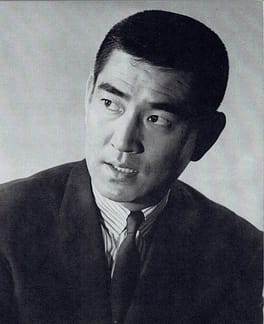
He never spoke. He never smiled. He simply stood there, his back to us—and somehow that alone pulled all the air in the frame toward him.
Ken Takakura. Born Goichi Oda in the Fukuoka countryside, he would come to be called "Ken-san" and to embody the very postwar Japanese ideal of what a man should be. From yakuza-film star to the silent voice of awkward, inarticulate men, what he embodied for over half a century was a strength that needed no words—and, beneath it, an immense tenderness.
A Fukuoka Youth at the Threshold of Film
He was born on February 16, 1931, in Nakama, Fukuoka, under the name Goichi Oda. After Tochiku High School and a degree from Meiji University's Faculty of Commerce, he had not set out to become an actor at all.
The turning point came in 1955, when he joined Toei as a second-generation New Face recruit. The very next year, in 1956, he made his lead-role debut in Denko Karate-uchi. At 180 centimeters tall, with a presence already beyond the ordinary, he nonetheless still needed time to truly become "Ken Takakura."
The Yakuza-Film Star
In 1964, his lead in Nihon Kyakuden vaulted him to the front of his era. Through the Abashiri Prison and Showa Zankyo-den series that followed, he cemented his standing as a star of the chivalry and yakuza genres.
Reserved, fiercely loyal, enduring injustice, and settling matters in the end with his back turned—the men he played were the secret ideal of audiences in a Japan booming with rapid economic growth. In 1959 he married the singer Chiemi Eri, divorcing in 1971. The man who never wavered on screen carried, in private, his own measure of joy and pain.
Independence and a Great Turning Point
In 1976, after more than twenty years there, he left Toei and went independent. It was a major gamble—and in 1977 the bet paid off magnificently.
There was his harrowing performance in Mount Hakkoda, and above all The Yellow Handkerchief, the story of a clumsy ex-convict making his way home to the wife who might be waiting. With it he broke out of the yakuza-star shell. The rows of yellow handkerchiefs streaming in the wind became one of the most indelible scenes in Japanese film history. For this role he won the very first Japan Academy Prize for Best Actor.
Four Crowns for a Silent Man
From there, Takakura reached a territory no one else could imitate. He won the Japan Academy Prize for Best Actor again in 1982, for Doran and Far Calls, Coming From a Mountain, and once more in 1983 for Station. In 1989 he appeared in the Hollywood film Black Rain, and his presence crossed borders.
Then came Poppoya in 1999. Playing a stationmaster standing alone at a snowbound terminal, he radiated the weathered dignity of a man who had endured every storm, and in 2000 he took his fourth Best Actor award. An actor who could say so much by saying so little may never appear again.
Beyond "Because I'm Clumsy"
"Because I'm clumsy." This single line, emblematic of his reticent characters, eventually came to stand for Takakura himself. But a man who can announce his own clumsiness so deftly cannot truly be clumsy. His ability to convey vast emotion through nothing but his back was the fruit of meticulous calculation and immense, patient craft.
The words attached to the announcement of his death were: walk the path of earnest endeavor; endure to the end and have no regrets. His pastimes were travel, horseback riding, rifle shooting, sword collecting, and cars, and he loved coffee. A stoic seeker who carried an air of solitary aesthetics—all of it, unmistakably, was "Ken-san."
He was named a Person of Cultural Merit in 2006 and received the Order of Culture, Japan's highest cultural honor, in 2013. A year after the nation recognized the summit of his career as an actor, on November 10, 2014, he died of malignant lymphoma at the age of 83.
That scene of yellow handkerchiefs rippling in the wind moves the heart anew every time. A man who could say so much without speaking will not come again. The eloquence of silence—he played it, with nothing but his back, for an entire lifetime.