Breaking the Mold: How Kiyoshi Hikawa Reclaimed His Own Song
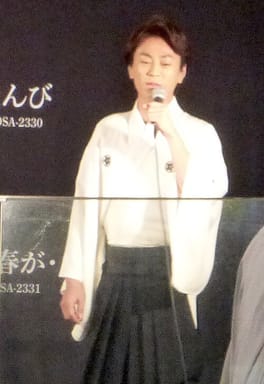
A young man from Minami-ku in Fukuoka rises through the traditional world of enka to be crowned its "prince," charming living rooms across Japan. On its own, that would already be a complete success story. But the real story of Kiyoshi Hikawa begins after the glory.
Born on September 6, 1977, he swept the Japan Record Awards, from Best New Artist all the way to the Grand Prize, and became a fixture on NHK's year-end Kohaku Uta Gassen. Then, at a certain point, he deliberately changed everything: his hair, his costumes, the very world his music inhabited. It was no mere image makeover. It was the quiet, fierce declaration of an artist choosing his own truth over everyone's expectations.
A Young Man Out of Fukuoka
Kiyoshi Hikawa was born on September 6, 1977, in Minami-ku, Fukuoka. After attending Daiichi Yakka Daigaku Fuzoku high school, he chose a path that, for a young person of his era, was anything but the fashionable cutting edge: the world of enka.
In a time when rock and pop dominated youth culture, deliberately devoting himself to enka revealed something about him from the start. He wasn't chasing trends; he was betting on the expression he believed in. A young man came out of Fukuoka and began to make his name in a deeply traditional art form, and that first step became the prologue to a long story.
The Birth of the "Enka Prince"
After his debut, Hikawa quickly drew attention as the young standard-bearer of the enka world. At the Japan Record Awards he won Best New Artist, and went on to claim the Outstanding Work Award and, ultimately, the highest honor of all, the Grand Prize. Each trophy was proof that the talent was real.
The public dubbed him the "enka prince." His poised presence and soaring voice were beloved across generations, and his regular appearances at Kohaku Uta Gassen made him part of the rhythm of the Japanese year-end. For many, his voice on the broadcast was itself a sign that the New Year was drawing near.
The Choice to Let Go
Yet, standing at the summit of that fame, he refused to settle into it. In the later phase of his career, Hikawa transformed his hair, his costumes, and the entire world his music spoke from, lunging out of the traditional enka image toward something freer and far more flamboyant. He broke his own shell.
It meant abandoning the safe road. Had he stayed inside the established "prince" brand, security would have been guaranteed. Instead, he chose his own truth over everyone's gaze. No one doubts the quality of his voice, but what shines even brighter is that nerve.
Becoming Someone Who Sings His Own Life
The reinvention was never just about appearance. It was the process of one person learning to express, out loud and without apology, the way he wanted to live. From enka to rock to full glam sparkle, he leapt across genre boundaries with an ease that left audiences both startled and exhilarated, wondering how far one artist could really go.
The figure he presents today through his official site and Instagram seems like a different person from the old "prince," and yet the root is the same: an artist who loves to sing and is determined to be honest with himself.
At first he was just a young man from Fukuoka who hit it big in enka. That alone would have been impressive. But what Kiyoshi Hikawa truly showed us came afterward: the courage to change the hair, the costumes, the way he sang, and to leap past everyone's expectations toward his own truth.
From the day he won Best New Artist to the present, where he expresses his way of living without flinching, he let us watch a whole human being break out of his shell. The voice was always there, but what you fall for is the courage, the choice of his own heart over other people's eyes. Fly however you want, Kiyoshi.