The Man Who Tightens the Frame: Kōichi Satō, the Actor Who Built Trust Instead of Trading on a Name
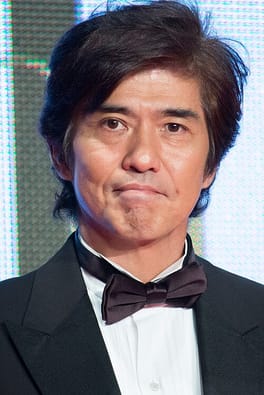
There are actors who, the moment they step into a scene, make the air go taut. Talk to anyone about Kōichi Satō and the first thing they mention is that presence. Before he says a word, the gravity of the frame shifts simply because he is standing in it. Born in Tokyo on December 10, 1960, he has anchored the gritty heart of Japanese cinema for nearly half a century.
But there is a name behind him that cannot be ignored. His father was the great star Tatsuya Mikuni. The easy road would have been to lean on it. The path Kōichi Satō chose was exactly the opposite.
The Weight of Being a Star's Son
His father was a giant whose name is carved into the history of Japanese film. To be born his son was both a privilege and an endless burden of comparison. Where many children of famous parents are crushed by the phrase "riding on a parent's coattails," or settle comfortably into it, Satō made a different choice.
A graduate of Tama Art University, he did not try to rocket to the top in flashy leading parts. Instead he chose to stack up quiet, weathered, hard-bitten roles one at a time, earning trust through the acting itself rather than the name. That stubborn resolve became the foundation of the heavyweight presence he would later command.
What the Awards Tell Us
That patient grind eventually returned to him as recognition. In 1982 he won the Blue Ribbon Award for Best New Actor, and in 1984 he took the Elan d'Or Award for New Actor. The industry was formally acknowledging a rising talent.
What is striking is that he did not stop there. In 2003 he won the Blue Ribbon Award for Best Actor, proving that he had fully matured from newcomer into an undeniable leading man. He also claimed Best Actor at the Mainichi Film Concours. Between the Blue Ribbon and the Mainichi honors, he had effectively swept up the gritty, soulful corners of Japanese cinema.
Between the Hard Face and the Grin
Satō's appeal is not only his gravity. Most often he plays flinty detectives and bruised, world-weary middle-aged men, with a shadowed conviction that puts the viewer on edge. That is his public face.
And then, without warning, he breaks into a grin that collapses all of it into warmth. It is disarmingly human, loosening the tension of a scene in an instant. That gap between the hard face and the grin is precisely the mechanism that grabs audiences every single time. To hold menace and tenderness inside one actor is both a craft and, surely, a matter of character.
The Real Thing, Without the Airs
At 182 cm he can simply stand there and own the frame. Yet for all his achievements and presence, he never acts like a big shot. Many people warm to the fact that an actor of his stature remains so completely unaffected.
His range is wide: police dramas, period pieces, human stories. Wherever he is placed, he pulls the reality of that world toward him. He does not dazzle with showy technique; he makes you believe the story through sheer bearing. That, perhaps, is what it takes to stay at the top for so long.
A man who built trust instead of inheriting a name. The road Kōichi Satō has walked reminds us of the worth of competing on merit, one film at a time, rather than relying on where you came from.
Actors who tighten the frame the instant they appear are not common. The real ones are not something we should take for granted. That is exactly why a presence like his is worth treasuring.