The Poet of Salad Anniversary Day: How Machi Tawara Carried Tanka to the Kitchen Table
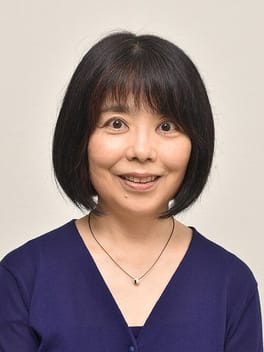
Say the word "tanka" and most people brace themselves. It sounds dusty, difficult, locked away inside a textbook. Then one short poem leapt clean over that assumption: "Because you said, 'This tastes good,' the sixth of July is Salad Anniversary Day."
Machi Tawara took a poetic form with more than a thousand years of history and parked it right next to the salad bowl on the kitchen counter. Without a single difficult word, using nothing but a casual, everyday line, she lands squarely in the reader's chest. Think about it for a moment and you realize what formidable craft that takes.
Born in Osaka, raised in Fukui, educated at Waseda, a former high school teacher turned poet, her journey is also the story of opening a classical form to modern life.
Born in Osaka
Machi Tawara was born on December 31, 1962, in Osaka City, Osaka Prefecture. Born on the very last day of the year, she is a Capricorn, and in the Chinese calendar she belongs to the year of the Tiger.
Her Osaka roots are intriguing when you consider her style. There is a real skill in the way she closes the distance with a reader, sliding a warm "isn't that nice" feeling straight into the heart. Choosing to compete not with elaborate logic but with the words that live right beside everyday life, she carries a certain Osaka-bred friendliness.
From Fujishima High School to Waseda
She studied at Fujishima High School in Fukui Prefecture and then at the First School of Letters, Arts and Sciences at Waseda University, where she trained in literature and sharpened her relationship with language.
After completing her studies at Waseda, Tawara chose the path of a high school teacher. Standing at the front of a classroom, teaching young people about words, day after day. It makes oddly perfect sense that this experience became the source of the gentleness running through her later work. Rather than mystifying readers with difficult vocabulary, she chooses words so that they actually reach the other person, an instinct continuous with the work of teaching.
Bringing Tanka into Daily Life
Tawara's greatest achievement is freeing tanka from its textbook rigidity and releasing it into living, modern Japanese. She writes of love and unremarkable afternoons in a colloquial voice, as if talking to a friend.
She does not show off with flashy technique. Instead she quietly tucks a universally familiar emotion inside an offhand line. That plainness is never the result of cutting corners. Words anyone can receive, that nonetheless cut deep: holding those two things together is the very core of her gift. Through her work she proved that tanka is not a distant classic but the language of those of us living now.
Awards and Recognition
Her talent has been recognized in the form of literary prizes. In 2004 she received the Murasaki Shikibu Literary Award, and in 2006 the Wakayama Bokusui Award.
Poet, author, translator, tanka poet, and once a high school teacher: Tawara's titles are varied, but a single thread runs beneath them all. Connecting people through language. Classic and contemporary, writer and reader, she has gently bridged them with words.
Tanka is hard, old, and has nothing to do with me, many people once thought, and Machi Tawara changed their minds with a single poem. That is no small thing. She took an art form that had been all but sealed inside a museum for centuries and brought it right onto the kitchen table.
Without reaching for difficult words, she strikes straight at the center of the heart. That gentleness was quietly radical. Machi Tawara is the poet who kept holding open the friendliest doorway into language, for all of us.