From the Microphone to the Diet: Masamune Wada's Life in His Own Voice
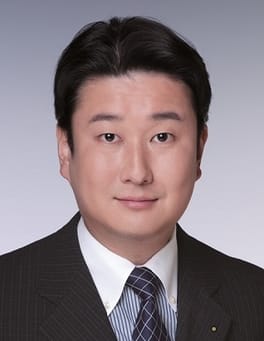
When the red light of a broadcast studio flicks on, there is a job that demands you command the air with your voice alone. For years, that was Masamune Wada's job. Born on October 14, 1974, in Suginami, Tokyo, he passed through Keio Chitorin High School and went on to study law at Keio University's Faculty of Law. Yet the young man who trained in law chose neither a firm nor a government ministry — he chose the path of speaking to people.
The craft of communication he honed as an announcer would eventually follow him onto a very different stage: national politics. The words he sharpened in front of television cameras became a weapon in the Diet. The setting changed, but the core of the work stayed the same — reaching people through the voice.
A Law Graduate Who Chose to Speak
On paper, a degree from Keio University's Faculty of Law reads like a textbook elite track. While many of his classmates moved toward law, the bureaucracy, or large corporations, Wada chose to become a broadcaster instead.
The training of a legal mind, paired with the work of constructing words in front of an audience — what looks at first like a detour would slowly resolve into a single line through his life. The discipline of handling logic and the discipline of translating that logic into language anyone can understand: holding both became the foundation of his later years.
Making Communication a Profession
Being an announcer is not simply reading from a script. Within a strict window of time, you must hold the listener's attention, hit every essential point, and deliver them without misunderstanding. That is not a skill picked up casually.
Wada spent years refining his voice in exactly that arena: the crisp articulation drilled in front of cameras, the sense of timing, the instinct to adjust his words while reading a listener's expression. These "muscles of communication" cannot be built overnight. The nerve he would later display in politics was almost certainly forged in this period.
From the Mic to a Seat in the Diet
In the later chapters of his life, Wada turned to politics. An announcer becoming a politician is hardly unheard of, but in his case the transition looks unusually natural.
That is because, at heart, the two jobs are the same. Both are about delivering what you want to say, clearly and without hesitation, in a way people can grasp. The nerve to state his case without flinching — built in front of the television camera — carried straight onto the floor of the Diet. Only the room changed, from studio to chamber. His core did not waver.
What a Tokyo Native Carries
There is something quietly intriguing in the arrangement: a man born and raised in Suginami, Tokyo, standing as a politician who carries voices from beyond the capital. Someone raised in a metropolis, listening to the lives and concerns of a region and carrying them into national politics.
Wada's figure as a politician lives in that gap — where one's birthplace and one's role need not align. A person skilled at conveying things through the voice takes up voices from a land not his own and renders them into words. The instinct he built as an announcer — to relay another person's words accurately — may be precisely what serves him here.
From announcer to politician. Line up the résumé and it reads like a glamorous pivot, but in truth Masamune Wada's life is strikingly consistent. In the studio and in the chamber alike, he has done one thing: reach people through his voice.
A man who made his living on the craft of communication now speaks his convictions on the floor of the Diet. The place and the title have changed, but the core never has. To live by the voice — that is the single line running through Masamune Wada.