The Truth About "The Monster": Why Naoya Inoue Is Called the World's Best
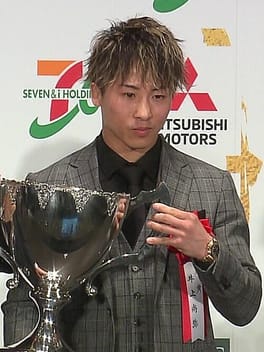
Inside the ring, world-class veterans crumple to the canvas the instant a punch lands, as if their legs suddenly forgot how to be legs. One man has made this happen again and again. His name is Naoya Inoue. He needs no fancy ring name. He has just one nickname: The Monster.
A boy born in Zama, Kanagawa, first pulled on a pair of gloves at age five. More than three decades later, he hasn't merely rewritten Japanese boxing history — he has raised the bar for the sport itself. He has unified all four major world titles in two separate weight classes, and in 2023 became the first Japanese fighter ever ranked the world's number one pound-for-pound boxer.
This is the story of a prodigy. It is also the quiet record of a father and son building something relentless, together.
It Started With His Father's Gloves
Naoya Inoue was born on April 10, 1993, in Zama, Kanagawa, Japan. His father, Shingo Inoue, was a former amateur boxer who would later become a trainer at the Ohashi Boxing Gym. Naoya met boxing at the age of five, and his father was his one and only coach.
He grew up locally, attending Kurihara Elementary and Junior High, then Shin-iso High School (renamed during his time there). As a high school freshman, he won the triple crown of Japanese amateur boxing — the Inter-High, the National Sports Festival, and the national selection tournament. For a boy who had already reached the summit of amateur competition, university was beside the point. His battlefield was already settled: it was the ring.
To the World, Faster Than Anyone
On October 2, 2012, at Korakuen Hall, Inoue knocked out his opponent in the fourth round of his professional debut. From there, the run that followed kept rewriting the sport's conventions.
In 2014, in only his sixth pro fight, he captured the WBC world light flyweight title — the fastest world-title win ever by a Japanese male boxer. He didn't stop. That same year, in just his eighth fight, he seized the WBO world super flyweight crown, becoming a two-division champion faster than anyone before him. Two years after his debut — the stage at which most fighters are merely earning a shot — Inoue already held two world titles.
Donaire: The Wall, and the Proof
In 2018, Inoue moved to bantamweight and entered the World Boxing Super Series, a tournament to crown the division's best. His opening bout against Juan Carlos Payano lasted just 1 minute and 10 seconds before the knockout — over before the crowd had settled in.
But the real test came in the 2019 final. His opponent was Nonito Donaire, a multi-division legend. Inoue fought on despite suffering an orbital fracture during the bout, winning by decision to become the tournament's inaugural champion. The Ring named the war its Fight of the Year. Then, in their 2021 rematch, Inoue overwhelmed Donaire with a second-round knockout, becoming the first fighter ever to unify all four belts at bantamweight. The rival who had once pushed him to the brink, he overcame completely — through his own evolution.
A Second Summit: Conquering Super Bantamweight
Most fighters who reach the top start playing it safe. Inoue didn't. In 2023, he moved up again, to super bantamweight.
That year he stopped undisputed champion Stephen Fulton in the eighth round to claim the WBC and WBO titles, then knocked out Marlon Tapales in the tenth to unify all four super bantamweight belts. Two-division undisputed status — territory no one in boxing history had ever reached. The Ring crowned him its pound-for-pound number one across all weight classes, a first for any Japanese fighter, and the moment the expert consensus confirmed he was not merely Japan's best, but the world's.
The Monster Outside the Ropes
So what is a man this dominant like when he steps out of the ring? The answer is almost disappointingly quiet. He is soft-spoken, polite, measured even in front of cameras. His hobby is collecting watches. At home, he is a father of three, married to Sakiya, his high school classmate.
His younger brother Takuma is also a professional boxer, and his father Shingo remains his dedicated trainer. The Inoue story is, in its own right, the story of a boxing family. "If you fear, you can do nothing. Once you decide to do it, you do it with everything," he said in a commercial — and that is exactly how he fights. His chilling line, "If I lose after preparing 100 percent, it just means the opponent was stronger," distills everything about his discipline and resolve.
A man whose nickname people assumed was hype — until they watched him fight and realized the nickname was, if anything, an understatement. There's nothing more thrilling than that. His punching precision and speed look almost inhuman, and the sight of elite fighters collapsing the instant he touches them remains hard to believe no matter how many times you see it.
He is a legend rewriting Japanese boxing history in real time. To get to watch this fighter, in the same era and the same country — that itself may be the kind of luck future generations will envy.