The Prince Who Watched the River: The Quiet Intellect of Naruhito
Some people have their entire life decided the moment they are born. On February 23, 1960, in a Tokyo hospital, a child arrived with only one road laid out before him: to one day become the symbol of a nation. No room to choose. No place to hide.
Yet what makes Naruhito's story so quietly compelling is that, rather than being crushed by that weight, he cultivated a curiosity entirely his own. The subject he chose to study was not power, not politics, but water itself: rivers, waterways, and the long history of people moving along them.
A Path Set From Birth
Born in Tokyo, Naruhito's life was public from the very start. His blood type and his height are kept private, his personal sphere narrowed to almost nothing. He studied at Gakushuin University before eventually crossing the sea to continue his education abroad.
A man in his position must weigh every word he speaks. He can hardly say openly what he likes or dislikes. How does someone raised under such constraints come to possess a world of his own? The answer lies quietly in the research topic he chose.
Along the Thames
Naruhito traveled abroad and devoted himself to graduate research in history, focusing on water transportation on the Thames. A man promised the highest place in his country, head down, patiently studying the humble logistics of rivers and waterways: there is something genuinely grounded in that image, an honest intellectual hunger that has nothing to do with the glamour of titles.
He later distilled those days into a book, The Thames and I. Beneath the formality, a soft and observant sensibility is etched into its pages. That he chose to record his memories of life beside a foreign river, in his own words, says a great deal about the kind of person he is.
The Respect of the World
Naruhito has received a remarkable number of honors, both at home and abroad. They begin with the Grand Cordon of the Supreme Order of the Chrysanthemum in 1980, followed by the Grand Cross of the Order of Merit of the Italian Republic in 1982, the Order of the Crown in 1991, the Grand Cordon of the Order of Leopold in 1996, the Order of Merit of Hungary in 2000, the Order of St. Olav in 2001, and the Order of the Elephant in 2004.
These are not mere decorations. They are forms of respect, extended over many years by nations around the world, standing quietly as evidence of trust accumulated across a lifetime.
The Presence of Calm
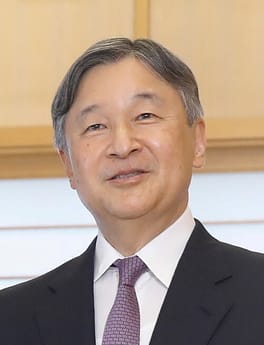
He is a man who must always choose his words carefully. And yet the gentle smile he lets slip in unguarded moments, the ease of his manner, carries something that puts the onlooker at rest almost without permission.
He does not assert himself loudly. But within that quiet there is a firm core. The gaze of a researcher who patiently studied the history of water, and the role of a national symbol, live side by side in him without contradiction. That is the source of his unusual, steadying presence.
To take on, plainly yet faithfully, a life whose road was decided at birth. To hold onto a private world of his own, the world of water, even from a position with no place to hide.
Perhaps the deepest charm of Naruhito's story lies not in the count of his glittering honors, but in the gaze of a single researcher, standing by the Thames, watching the river flow.