From PL Gakuen to the Dugout: Saburo, Okayama's Quiet Baseball Lifer
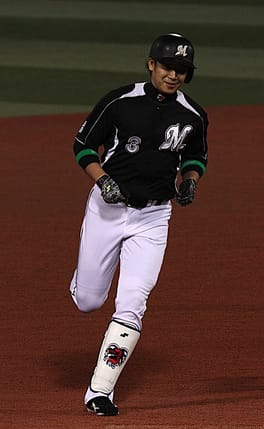
The name "Saburo" can give you pause for just a second. It carries an old-fashioned, almost comedic ring to it, the kind of name you might expect on a vaudeville stage rather than a baseball diamond. Yet this name belongs, without question, beside the stitching of a hardball.
Born on June 1, 1976, in Kita Ward, Okayama City, this man passed through one of the most storied institutions in Japanese baseball history before spending long years on the field. He was never the type to carry flashy headlines. But he is, unmistakably, a man who has lived his life through baseball.
Working only from the facts that have been made public, let us quietly trace the outline of Saburo, the baseball lifer.
The Soil of Okayama
His story begins in the mild air of the Seto Inland Sea region and the voices of boys chasing a white ball. Kita Ward, Okayama City, near the heart of the prefectural capital, is where he was born in 1976.
A Gemini by zodiac, born in the Year of the Dragon, he would grow to 181 centimeters, a height well-suited to the game and one that gave him a real presence on the field in later years. Exactly when he first picked up a hardball, or what sparked his serious pursuit of the sport, has not been made public. But the next step he chose tells the whole story.
A Rite of Passage Named PL Gakuen
He went on to attend PL Gakuen Junior High and High School, a legendary powerhouse that no discussion of Japanese high school baseball can avoid. The school has sent countless players into the professional ranks, and simply walking through its gates was itself a kind of selection.
The strict hierarchy, the relentless practice volume, and the air of a program seriously aiming for the national summit would have forged in him not just technique but the nerve to perform when it mattered and the discipline of belonging to a team. The days of quiet, grinding repetition, which no glamorous result can fully capture, became the foundation of the man he became.
From Player to Mentor
According to the available record, his journey does not end with the title of "player." After his playing career, he shifted his footing toward roles as a baseball coach and manager.
This is by no means a given. For someone who competed at the front line to move into coaching, you need more than stamina or reputation; you need something worth passing on, carried inside you. The desire to show the next generation the view that only those who have sweated for it ever see may well be what pushed him into that transition.
It is hard to measure in numbers or titles, but the choice to keep standing on the field after one's playing days are over is itself a kind of proof of substance.
Strength Beyond the Spotlight
He spent 22 seasons, from 1995 to 2016, almost entirely with the Chiba Lotte Marines, then served as farm-team manager and head coach before taking over as the Marines' manager in 2026.
He was not the star shining at the center of the spotlight, but the dependable older-brother figure who quietly does his job when the game is on the line and steadies the whole team. In a team sport, this kind of presence is in fact the hardest to find. There are baseball people who hold everything together from places no statistic ever sees.
Saburo. Despite the lighthearted ring of the name, he is a man who passed through the elite path from Okayama to PL Gakuen and devoted his life to baseball, as a player and then as a coach and manager.
He may not be a player wrapped in flashy legend. But in the figure of a man who keeps standing on the same field after his playing days and tries to hand the view down to the next generation, you can feel a love for the game soaked into the marrow. A steady man who supports the team from below: the certainty of that presence will linger on the baseball grounds far longer than any loud applause.