The Actress Who Disappears: Sakura Andō and the Art of Simply Being
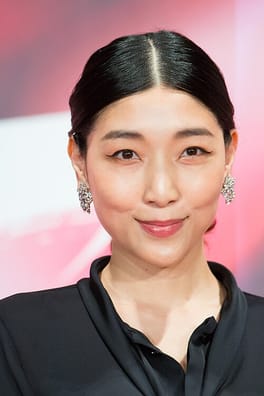
Something strange happens the moment Sakura Andō appears on screen: you stop noticing that you are watching an actress at all. What stands there instead is a whole human being—a tired mother in a kitchen, a woman quietly coming apart at the seams, someone who feels like they are genuinely breathing somewhere in the world.
Born in Tokyo on February 18, 1986, Andō belongs to that rare class of performers who can command the entire mood of a scene without ever raising their voice. She never telegraphs. She never oversells. And yet, before you know it, she has reduced you to tears. That bottomless power hidden inside her stillness is the truth of who she is.
This is the story of an actress whose talent has been confirmed in the form of awards—and who, even so, is so vividly alive that the awards almost stop mattering.
Born in Tokyo
Sakura Andō was born in Tokyo on February 18, 1986. She is an Aquarius, born in the Year of the Tiger, and studied at Gakushuin Women's College.
Her father is the actor Eiji Okuda, her mother the essayist Kazu Ando, her older sister the director Momoko Ando, and her husband the actor Tasuku Emoto. She stands 160 centimeters tall and is represented by Humanité. But the truth worth telling about Andō has never lived in her statistics or her titles. It lives in that thing she does on screen—the acting that does not look like acting.
When the Awards Caught Up
In 2013, Andō won the Blue Ribbon Award for Best Actress. Two years later, in 2015, she claimed the very same honor again. Within just a few years, she had carried off one of Japanese cinema's most telling accolades twice over.
This was no fluke. The industry plainly recognized a specific kind of talent: the ability to hold an entire scene simply by existing within it, without shouting, without over-explaining a single emotion. In 2020 she also received the Elan d'Or Award for Best Newcomer, a further mark of just how widely her presence had come to be acknowledged.
The Power of Presence
Most actors try to deliver their emotions to the audience—raising their voice, sculpting their expression, handing over the darkness or the grief in a form that is easy to read. Andō's approach runs the opposite way. She announces nothing. She refuses to get ahead of her own feelings. And that is exactly why she catches you off guard and shakes you loose.
Cast her as an ordinary housewife and she seems to genuinely live in that house. Cast her as a woman carrying a quiet darkness behind her eyes, and that darkness seeps straight into your own chest. When Andō is simply present on screen, the very air of the scene becomes hers. Talent this quiet, and this frightening, does not come along often.
When the Trophies Fade
There is an irony here: even two Blue Ribbon Best Actress wins somehow slip into the background in her presence. Faced with a performer this alive, counting trophies starts to feel like a strangely beside-the-point exercise.
She exists so naturally that she scarcely seems to need validating. It is a question of craft, yes, but also of something beyond craft. She never gives the audience the opening to remember, "Oh—this is a performance."
The frightening thing about Sakura Andō is her stillness. An actress who can take over the mood of a scene without ever raising her voice is impossible to predict—and impossible to look away from.
In what role will she appear next, and how exactly will she blindside us? Almost certainly, she will slip quietly into yet another extraordinary performance and leave us crying without a word to say. That she makes you want to surrender willingly to that ambush is precisely what makes her Sakura Andō.