A Student for Life: The Quiet Miracle of Sayuri Yoshinaga
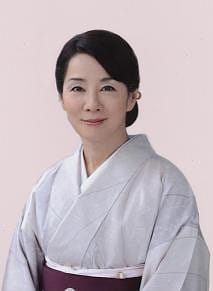
In 1957, the voice of an elementary-school girl drifted out of a radio set. Cast in the drama Akado Suzunosuke, that child had no idea she was about to become, in effect, the living history of Japanese cinema. Film would gain color, eras would come and go, and more than half a century later she would still be standing at the very center of the screen.
Her name is Sayuri Yoshinaga. A national treasure who inspired a whole fandom—the "Sayurists"—during Nikkatsu's golden age, she nonetheless keeps a four-word motto: a student for life. How can someone with such a record still insist she is merely learning? The answer lies in the path she has walked.
A Story That Began on the Radio and Never Ended
Born in Shibuya, Tokyo, in March 1945, she stepped into show business before postwar Japan had even fully steadied itself. Her 1957 radio debut came while she was still in elementary school. In 1959 she appeared on film for the first time, and by 1960 she was already carrying a picture as the lead in Girl in the Glass.
That same year she signed an exclusive contract with Nikkatsu. Over the next eight years, until 1968, she appeared in an astonishing 76 films. Few actors in the history of Japanese cinema have raced through such a volume of work while pouring themselves into each role. Her youth and the youth of the silver screen were one and the same.
The Youngest Crown, and a Second Gift
The turning point arrived in 1962. Her performance in A Town Without Seasons earned her the Blue Ribbon Award for Best Actress—at the time, the youngest recipient ever. Playing a girl growing up in a foundry town, she embodied the raw reality of postwar Japan.
In the very same year she opened another door entirely, making her singing debut with Samui Asa. The following year, her duet with Koji Hashimoto, Itsudemo Yume wo, won the Japan Record Award. Still sung today as a beloved Showa-era classic, it proved that Yoshinaga was never merely a creature of the screen.
The Actress Who Studied Philosophy—and Graduated Second
Even at the peak of her fame, she refused to stop learning. She majored in Western philosophy at Waseda University and graduated in 1969—second in her entire class. That she kept up her studies between grueling shoots, and excelled, tells you everything about how she lives.
Her motto, a student for life, is no pose. She never settled into mere stardom; she kept learning, thinking, and questioning, and that very stance is what has held her on the front line for over fifty years. In 1973 she married television producer Taro Okada, and in work and in private she went on walking quietly to her own rhythm.
Proof of a Great Actress—Four Crowns
In her mature years she won the Japan Academy Film Prize for Best Actress three times, in 1985, 2001, and 2006, for Ohan, Nagasaki Burabura Bushi, and North Zero Year. Each was a weighty human drama, and each time she revealed a new face. She received the Medal of Honor with Purple Ribbon in 2006 and was named a Person of Cultural Merit in 2010.
What is most remarkable is that the glory is not in the past tense. In 2024 she won the Blue Ribbon Award for Best Actress once more—67 years after her debut, still active, still celebrated. That same year her husband of decades, Taro Okada, passed away at 94. Her life absorbs both joy and loss, and still moves forward.
The Human Margins Behind the Poise
Her bearing is flawlessly upright. For years she kept her true age vague to protect the dream of the roles she played—a near-monastic discipline. Put that way, she sounds almost unapproachable. Yet she has the kind of human quirks that make you smile.
She loves railway travel, the Gonō Line above all—no wonder she has long been the face of JR East's "Otona no Kyujitsu Club." She enjoys reading, sips sake, and openly calls herself a Momoiro Clover Z fan. And she flat-out dislikes konjac. It is precisely this disarming warmth that turns her from a distant grande dame into everyone's Sayuri Yoshinaga.
Born just after the war, still at the heart of the screen today, her career is very nearly the history of Japanese film itself. To have walked so far and still call herself "a student for life" is a humility far more beautiful than the self-importance of any elder statesman.
After all these decades, that upright back has not bent a single millimeter—while behind the poise she hides a mischievous love of trains and idols. Sayuri Yoshinaga is, quite simply, a national treasure.