From Cleanup Hitter to Championship Skipper: Tatsunori Hara and the Art of Standing at the Center
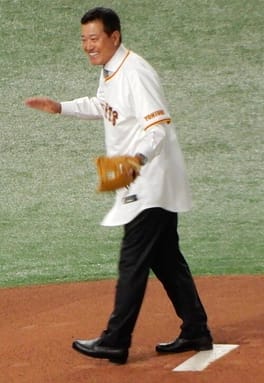
A boy born in Ōmuta, Fukuoka, and raised in Kanagawa would grow up to bat cleanup for the Yomiuri Giants, and then to manage that same team to championship after championship. Say the name Tatsunori Hara to a Japanese baseball fan, and the first thing that comes to mind is usually that crisp, matinee-idol batting stance.
But Hara was more than a good-looking star. What makes his story compelling is the second act: after his years standing at the center of the diamond as a player came a new life standing at the center of the dugout, arms crossed, as a manager. As a player and as a skipper alike, Hara never gave up his role as the lead character in the drama of baseball.
This is the story of a man who stayed, always, right in the middle of things.
Son of a Famous Coach
Tatsunori Hara was born on July 22, 1958, in Ōmuta, Fukuoka Prefecture, and grew up in Atsugi and Sagamihara, Kanagawa. No account of his beginnings is complete without his father, a celebrated high school baseball coach. Raised as the thoroughbred son of a baseball man, the boy inevitably carried the weight of others' expectations.
In baseball, the world makes noise over bloodlines all the time. But Hara did not coast on his. He went to Tokai University, polished a clean swing and a knack for the big moment, and earned his reputation on his own merits. Whatever people whispered about his famous father, he answered with his bat.
The Weight of Batting Fourth for the Giants
After turning professional, Hara shouldered one of the heaviest assignments in Japanese baseball: cleanup hitter for the Yomiuri Giants. As the man expected to drive in runs for the team, he rose to that responsibility.
The ball came off the bat of his well-proportioned 181-centimeter frame, and he had a gift for delivering when it mattered. Above all, he simply looked the part the moment he stepped onto the field. As a team leader, Hara became one of the faces of the Giants brand, a star whose looks and ability together pulled fans into the ballpark.
To the Center of the Dugout: Manager Hara
When Hara set down his bat as a player, his story did not end. If anything, this was the second act. He took over as manager of the Giants and led the team to multiple Japan Series titles.
Standing in the dugout with his arms folded, planted like a fixture, he looked the very picture of a leader. The pressure he had once carried as a player he now carried for the entire team. From the one playing the game to the one moving the people who play it: the role changed, but the place where he stood was always the center of the contest.
Carrying the Flag
Hara's leadership was not confined to the Giants. He also managed Japan at the 2009 World Baseball Classic, beating South Korea in the final for a second straight title. Steering a side that represents an entire country is a role entrusted only to those who have competed at the highest level for years, which is precisely what Hara had done.
From the face of a club to the face of a nation: for a man who kept producing results both as a player and as a manager, the responsibility came naturally. On the field or beside it, he ended up the lead character either way. That was simply how Tatsunori Hara moved through the game.
A Name in the Hall of Fame
In 2012 the weekly Shūkan Bunshun reported a 1988 affair and a related ¥100 million payment in 2006; Hara broadly admitted the story and apologized. In 2018 his name was inscribed in the Baseball Hall of Fame. Plenty of people are remembered for brilliance as a player or for victories as a manager. Few leave their mark on history in both.
His years batting cleanup and his years lifting championship trophies were both the real thing. That is why his gravitas carries a weight that cannot be manufactured overnight.
For my generation, Hara is a man whose batting stance as the Giants' cleanup hitter and whose arms-crossed pose as a manager both live, side by side, in our memory. You watch him and think: some people really are just built different.
A man who left his name in history as both a player and a manager, all the way to a place in the Baseball Hall of Fame. Staying at the dead center of things is harder than it sounds. Hara made it look like the most natural thing in the world, and his story will keep being told.