The Man Who Stares at Numbers: Yoichi Miyazawa and the Invisible Work of Taxation
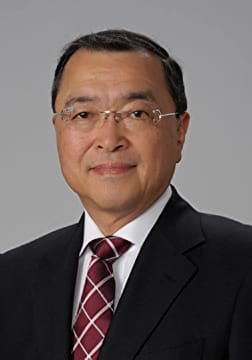
Some politicians make their name shouting across television debate panels. Others spend their careers in quiet rooms, squinting at numbers that no one else wants to look at. Yoichi Miyazawa belongs squarely to the second kind.
Born in Tokyo on April 21, 1950, his life traces an almost ruler-straight line of elite achievement: the University of Tokyo, then a path into the machinery of government, and finally years spent steering one of the least glamorous but most consequential areas of Japanese policy — taxation. It is unflashy work, and it touches our daily lives more deeply than almost anything else.
Born in Tokyo, Bound for the University of Tokyo
Miyazawa was born in Tokyo in 1950, a Taurus born in the year of the Tiger. His generation came of age amid Japan's postwar recovery and the high-growth decades that followed.
The clearest signpost in his education is the University of Tokyo — in Japan, the classic gateway for those headed toward the bureaucracy or political life. He passed through that gate and laid the foundation for the expertise that would define his later career. Even from the start, the signal is steadiness rather than spectacle.
Taxation, the Hard-to-See Battlefield
Whenever Miyazawa's name comes up, one word follows close behind: tax. His tenure as chairman of the Liberal Democratic Party's Tax Research Commission gives his political profile its sharpest outline.
The tax commission rarely draws public attention. Yet it is precisely where the rules that shape everyday household budgets are forged. What gets raised, what stays still, what is left untouched — each of these decisions quietly ripples into ordinary people's wallets. Miyazawa carried that difficult balancing act for a long stretch of his career.
The Miyazawa Bloodline
No account of him is complete without his family. Yoichi Miyazawa is a nephew of Kiichi Miyazawa, a former Prime Minister of Japan.
To belong to a family that produced a Prime Minister carries a particular weight in Japanese politics — expectation on one side, the pressure of comparison on the other. Yet the road he chose was not the showy one of applause and cameras, but the back-room path of mastering the fine print of policy. He seems to have built his standing on expertise rather than leaning on his name.
Quietly, but Surely
Miyazawa's record is not stacked with dramatic awards or glittering anecdotes. But that absence may say something true about who he is as a politician.
Working with numbers and systems is dull, demanding, and seldom thanked. Playing the role of the man who frowns and says "no, this can't come down" is no way to become popular. And yet someone has to do it. Miyazawa took on that role and kept at it for years.
The politicians who bask in the spotlight are the ones we tend to remember. But the people quietly rearranging the texture of our everyday lives may well be the patient number-crunchers like Yoichi Miyazawa.
Born in Tokyo, educated at the University of Tokyo, and devoted to the hard-to-see domain of taxation, he is a politician whose work is already woven into our daily lives — usually before we ever notice it.