The Quiet Phenomenon: How Yui Aragaki Moves a Nation With a Smile
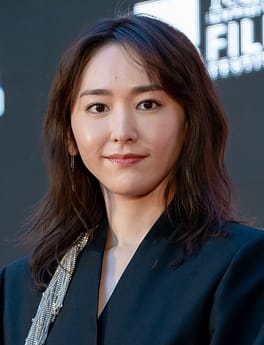
A girl born in Naha, Okinawa, won the grand prix at an audition for the magazine Nicola while she was still in junior high school. Before long the country knew her less by her real name than by a single affectionate nickname, "Gakky," three syllables that came to ring out like a brand of their own.
Yui Aragaki's career is less a story of dramatic reversals than a steadily, quietly accumulated history of trust. People tend to talk only about that luminous smile, but inside it lives a careful command of comic timing and the spine of someone determined to stand on her own in the entertainment industry.
This is the story of how a smile said to raise the temperature of any screen became something people call a phenomenon.
From a Naha Girl to a Magazine Cover
Yui Aragaki was born on June 11, 1988, in Naha, Okinawa. She stepped into show business after entering a magazine audition while attending junior high school in the village of Ozato.
In 2001 she debuted as an exclusive model for the teen magazine Nicola. Moving from Okinawa to Tokyo, she enrolled at Hinode High School and first made her name as a model. Her real move into screen work began in 2003, and wider recognition would come a little later still.
Koizora and a Calling Card Named Newcomer
The turning point arrived across 2006 and 2007. After drawing attention in the drama My Boss My Hero, she played the lead, Mika, in the 2007 film Koizora.
That single film set her course. In 2008 she won the Newcomer of the Year and Topic Award at the 31st Japan Academy Film Prize, along with the Newcomer Award at the 50th Blue Ribbon Awards. It was the moment she broke past the "young model" label and secured her standing as a genuine performer.
The Discovery of Comedy
What makes Aragaki special is that she never stayed confined to pure, wholesome roles. In the 2008 drama Code Blue she played ER doctor Megumi Shiraishi, holding her own in a high-rated, serious ensemble.
Then came Legal High in 2012. As lawyer Machiko Mayuzumi, she revealed a comedic side built on relaxed, perfectly judged humor. A luminous actress who could also command the rhythm of laughter—this discovery quietly set the stage for the social phenomenon to come.
The Day a Dance Became a Phenomenon
In 2016 she led the drama Nigeru wa Haji da ga Yaku ni Tatsu as Mikuri Moriyama. The ending sequence, nicknamed the "Koi Dance," leaped beyond television to sweep up the entire country. Office workers, children, and even people who never watched dramas were copying the choreography.
That year she won Best Actress at the 91st Television Drama Academy Awards. Then her 2017 film Mix. brought the Outstanding Performance by an Actress in a Leading Role at the 41st Japan Academy Film Prize and Best Actress at the 60th Blue Ribbon Awards in 2018, cementing her place as a leading actress.
Going Freelance, and a Tectonic Shift
In 2021 Aragaki left Repro Entertainment, her longtime agency, to go freelance under a partial commission contract. Choosing to stand without an organization's banner behind her revealed the backbone beneath the smile.
That same May of 2021, she announced her marriage to musician Gen Hoshino. The collective sigh that rolled across the Japanese archipelago at the news was a kind of tectonic shift. In both her private life and her work, she quietly but boldly chose her own path. In 2024 she led the film Ikkoku Nikki as Makio Takashiro, continuing her journey as an artist.
Yui Aragaki became that rare figure recognized by a nickname alone.
Sweetness and spirit, luminosity and calculated comedy: holding opposites together, she raises the temperature of a screen with a single smile and, at times, moves an entire nation. She has long since outgrown the frame of "an actress," remaining instead a quiet, enduring phenomenon.