The Man Who Wanted to Be a Painter: How Akira Kurosawa Became "Kurosawa of the World"
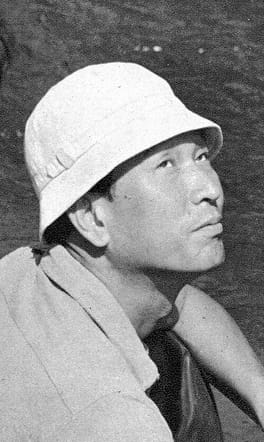
His work refuses to fade with the decades. The tension lodged in a single cloud drifting across the sky, or in the very way a horse runs, sends a chill down the spine on every viewing.
Setting Down the Brush, Stepping in Front of the Camera
Akira Kurosawa was born on March 23, 1910, in Ōi-machi, Ebara-gun, Tokyo, present-day Higashi-Ōi in Shinagawa. He was the youngest of eight children of his father Isamu and mother Shima.
As a young man, Kurosawa dreamed not of film but of painting. He loved the Post-Impressionists Cézanne and Van Gogh, as well as Japanese painters like Tessai Tomioka and Seison Maeda, and seriously aspired to become a painter himself. But in 1936 he answered a newspaper ad seeking assistant directors at the P.C.L. Film Studio, later Toho. That was the fork in the road. Studying under director Kajiro Yamamoto, he absorbed the fundamentals of filmmaking to the marrow. His passion for painting never died; in later years it crystallized into his storyboards and his composition of the frame.
The Door to the World That Rashomon Opened
In 1943, Kurosawa made his directorial debut with Sanshiro Sugata. But what made his name ring out across the world was Rashomon in 1950. Its daring structure, in which several characters each recount the same incident differently, asking "what is truth?", won the Golden Lion at the Venice International Film Festival, and the following year it received an Honorary Academy Award.
At the time, Japanese cinema was almost unknown internationally. Rashomon flung that door wide open and announced to the world that Japan had a Kurosawa. Its narrative structure is deeply etched into film history.
Seven Samurai and the Obsession with Perfection
In 1954, Kurosawa released Seven Samurai. The story of seven warriors gathered to defend a village from bandits secured an unshakable place as a masterpiece of world cinema. Its template of assembling a team to face overwhelming odds would be borrowed again and again by the Hollywood action films that followed.
And no account of Kurosawa is complete without his extraordinary perfectionism. He would halt shooting to wait for the right clouds or the right rain, and was known for demands like "the horse isn't acting" and "make the river flow the other way." It must have been brutal for his crew. Yet that very obsession is seared into the film, and it is the reason his work has not faded after all these decades.
Forever Chasing the Next One
Even after founding Kurosawa Production in 1959, his creative drive never stopped. He stacked up masterpieces like Yojimbo, High and Low, and Red Beard, won the Academy Award for Best Foreign Language Film with Dersu Uzala in 1975, and took the Palme d'Or at Cannes with Kagemusha in 1980. His 1985 film Ran was a color epic that transposed Shakespeare's King Lear into the warring-states era of Japan.
And having filmed so very much, he could still flatly declare that his best film was the next one. Even after becoming the first film professional to receive the Order of Culture in 1985 and the Academy's Honorary Award for Lifetime Achievement in 1990, his gaze remained fixed on the next picture.
On September 6, 1998, Akira Kurosawa died at his home in Seijo, Setagaya, Tokyo, at the age of eighty-eight. That same year he became the first film director to receive the People's Honor Award, granted posthumously.
A young man who wanted to be a painter became a director before whom the whole world bowed. Life is truly unpredictable. And yet perhaps there was nothing accidental about the road he took. It was that obsession, the soul he poured into a single cloud and the very gait of a running horse, that made him "Kurosawa of the World." The fingerprints seared into his films have not faded, and they go on sending a chill down the spine of everyone who watches.