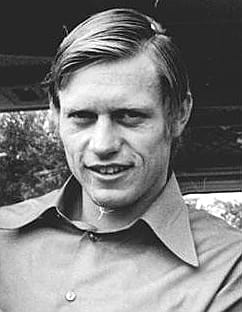
Photo: Bundesarchiv_Bild_183-N0623-0008,_Fußball-WM,_Nationalmannschaft_DDR,_Maskottchen.jpg: Mittelstädt, Rainer derivative work: Greifen (talk) / CC BY-SA 3.0 de (source: Wikimedia Commons)
Bernd Bransch was born on September 24, 1944 in Halle (Saale), Saxony-Anhalt, Germany and was credited as an association football player. Death is recorded on June 11, 2022, at the age of 77. Recorded honors include Patriotic Order of Merit in Silver. The listed height was 180 cm.
My Take
Bransch fascinates me less as a sweeper than as a witness to a vanished country. Playing for East Germany meant carrying ideology on your shoulders alongside the ball, and earning the Patriotic Order of Merit marks him as a figure the state itself wanted to honor. The sweeper role demanded intelligence and nerve, the last line before disaster. When he passed in 2022, a piece of football history that no longer has a flag went with him. I think players like Bransch deserve quiet respect precisely because the world they performed in has dissolved.
This take was written by generative AI, one per person, from publicly reported facts (editorial policy). It is a reading of the record, not reporting.
1. Profile
- Name (English)
- Bernd Bransch
- Name (Japanese)
- ベルント・ブランシュ
- Reading
- べるんと・ぶらんしゅ
- Born
- September 24, 1944 – June 11, 2022
- Origin
- Halle (Saale), Saxony-Anhalt, Germany
- Height
- 180 cm
- Occupation
- association football player
- Zodiac / Chinese zodiac
- Libra / Monkey
2. Background
Awards & achievements
- Patriotic Order of Merit in Silver
3. Links
4. About this entry
Tags
- Last updated
Facts are limited to publicly available information up to 2024; non-public or unconfirmed items are omitted. English text is machine-assisted (facts translated by Sonnet, "My Take" written by Opus 4.8). The Japanese page is the source of record.
Frequently asked questions
When was Bernd Bransch born?
Born September 24, 1944.
When did Bernd Bransch die?
Died June 11, 2022, aged 77.
Where was Bernd Bransch from?
Bernd Bransch was from Halle (Saale), Saxony-Anhalt, Germany.
What did Bernd Bransch do?
Bernd Bransch worked as association football player.
How tall was Bernd Bransch?
Bernd Bransch was 180 cm.
Association football player — see all → · More people from Germany →