The Wolf of the Dohyo: Chiyonofuji and the Body He Built Himself
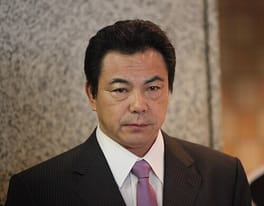
A young man came down from Hokkaido and, in a sport where sheer size so often decides everything, embodied a strength that was sharper and more elegant than brute mass could ever be. Chiyonofuji Mitsugu, born June 1, 1955, and gone from us on July 31, 2016, remains a yokozuna without whom the history of sumo simply cannot be told.
They called him "The Wolf," and the nickname says nearly all of it. The lean, packed muscle. The piercing glare. The technique that sent far bigger men flying without a hint of mercy. He was never merely strong. Within the small circle of the dohyo, he created a style that burned itself into the memory of everyone who watched.
A Young Man from Hokkaido
Chiyonofuji was born in Hokkaido. Sumo is a sport often thought to favor those blessed with a large frame, yet the body he carried into it could hardly be called blessed. A chronic tendency to dislocate his shoulder hung over his career as a wrestler like a long shadow, a genuine weakness.
For most, such a flaw would have been reason enough to falter. But Chiyonofuji was not most. He chose, instead, to remake his own body from the ground up.
Muscle as a Choice
The answer he arrived at was relentless physical training. To guard against dislocation and protect himself, Chiyonofuji clad himself in muscle that looked forged from steel. In the sumo world of his time, this was not the conventional "wrestler's body" at all.
And yet that lean, sculpted frame became his signature. He would toss far larger opponents with an effortless overarm throw, proving that it was technique and a disciplined body, not size, that decided a bout. He had taken his greatest weakness and flipped it into his greatest weapon.
What It Means to Stay at the Top
As a yokozuna, Chiyonofuji held the summit of the sumo world for years on end. Reaching the top and remaining there are two entirely different challenges. Where so many wrestlers spend themselves at the peak of their glory, he kept winning, that sharp gaze never dimming.
That face fixing an opponent across the dohyo carried a pressure that must have felt like the match was already half lost. Strength and bearing in equal measure, his presence was the very ideal that the word yokozuna is meant to demand.
The Proof of a National Honor
In 1989, Chiyonofuji received the People's Honor Award, one of the most prestigious national distinctions Japan can bestow. For a single competitor in a sport to be granted it speaks to a weight that is hard to overstate.
The award testified to more than raw strength. It recognized the whole of what he was: a man who moved people for years, who carried the traditional culture of sumo on his shoulders, and who sat at its summit with dignity. Beyond strength, he possessed true stature, and the nation acknowledged it.
On July 31, 2016, Chiyonofuji passed away. At sixty-one, it was a farewell that came far too soon.
Even so, that lean back and that glittering, ferocious stare on the dohyo still live in the memory of those who watched him. For generations who never saw him compete in real time, the name "The Wolf" remains a symbol of strength itself. A wrestler who turned his weakness into a weapon and held the very top. What he left behind was something larger than the word "effort" could ever contain: a way of living.