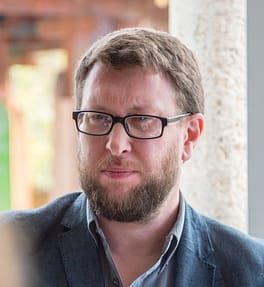
Photo: Scyrene / CC BY-SA 4.0 (source: Wikimedia Commons)
Public records list Darren Naish as a paleontologist, non-fiction writer and docent. Darren Naish studied at University of Southampton.
My Take
Darren Naish is exactly the sort of scientist I root for. He is a vertebrate palaeontologist who has described and reassessed creatures like Eotyrannus and Xenoposeidon, but he is equally a communicator, translating the deep past for the rest of us through his long-running blog and social presence. That dual role matters. Plenty of brilliant researchers stay locked in the lab, yet Naish reaches outward, keeping the public's wonder alive. Naming a dinosaur is a quietly monumental act, adding a permanent entry to humanity's map of life. He turned a childhood obsession into a career, and honestly, I find that both rare and a little enviable.
This take was written by generative AI, one per person, from publicly reported facts (editorial policy). It is a reading of the record, not reporting.
1. Profile
- Name (English)
- Darren Naish
- Name (Japanese)
- ダレン・ナイシュ
- Reading
- だれん・ないしゅ
- Born
- 1975
- Origin
- England, United Kingdom
- Occupation
- paleontologist / writer / non-fiction writer / docent
- Zodiac / Chinese zodiac
- Rabbit
2. Background
- University
- University of Southampton
3. Links
- Official sitehttps://darrennaish.wordpress.com
- Xhttps://x.com/TetZoo
- Wikipedia (English)https://en.wikipedia.org/wiki/Darren%20Naish
- Wikipedia (Japanese)https://ja.wikipedia.org/wiki/%E3%83%80%E3%83%AC%E3%83%B3%E3%83%BB%E3%83%8A%E3%82%A4%E3%82%B7%E3%83%A5
- Wikidatahttps://www.wikidata.org/wiki/Q11774302
4. About this entry
Tags
- Last updated
Facts are limited to publicly available information up to 2024; non-public or unconfirmed items are omitted. English text is machine-assisted (facts translated by Sonnet, "My Take" written by Opus 4.8). The Japanese page is the source of record.
Frequently asked questions
Where is Darren Naish from?
Darren Naish is from England, United Kingdom.
What does Darren Naish do?
Darren Naish works as paleontologist, writer, non-fiction writer, docent.