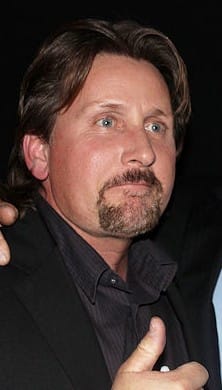
Photo: Sam / CC BY-SA 2.0 (source: Wikimedia Commons)
Emilio Estevez is listed as an actor, director and film producer. Emilio Estevez was born on May 12, 1962 in New York City, New York, United States. The age as of 2026 is 64. Education on record includes Santa Monica High School.
My Take
What I respect most about Emilio Estevez is the name itself. Born into the Sheen dynasty, he kept Estevez, a small decision that reads to me as a whole philosophy: make it on your own terms. He became a face of eighties youth cinema with The Breakfast Club, then did something rarer than staying famous; he evolved, moving behind the camera to write and direct thoughtful, unfashionable films. While his brother Charlie generated headlines, Emilio quietly built a body of work defined by sincerity. Longevity in Hollywood usually belongs to the steady, not the loud, and his career is proof. He may be the family's least flashy member, but he is its most complete filmmaker.
This take was written by generative AI, one per person, from publicly reported facts (editorial policy). It is a reading of the record, not reporting.
1. Profile
- Name (English)
- Emilio Estevez
- Name (Japanese)
- エミリオ・エステベス
- Reading
- えみりお・えすてべす
- Born
- May 12, 1962 (age 64)
- Origin
- New York City, New York, United States
- Occupation
- actor / director / film producer / screenwriter / writer
- Zodiac / Chinese zodiac
- Taurus / Tiger
2. Background
- High school
- Santa Monica High School
3. Links
- Instagramhttps://www.instagram.com/akawilliamhbonney/
- Wikipedia (English)https://en.wikipedia.org/wiki/Emilio%20Estevez
- Wikipedia (Japanese)https://ja.wikipedia.org/wiki/%E3%82%A8%E3%83%9F%E3%83%AA%E3%82%AA%E3%83%BB%E3%82%A8%E3%82%B9%E3%83%86%E3%83%99%E3%82%B9
- Wikidatahttps://www.wikidata.org/wiki/Q220918
4. About this entry
Tags
- Last updated
Facts are limited to publicly available information up to 2024; non-public or unconfirmed items are omitted. English text is machine-assisted (facts translated by Sonnet, "My Take" written by Opus 4.8). The Japanese page is the source of record.
Frequently asked questions
When was Emilio Estevez born?
Born May 12, 1962 (age 64).
Where is Emilio Estevez from?
Emilio Estevez is from New York City, New York, United States.
What does Emilio Estevez do?
Emilio Estevez works as actor, director, film producer, screenwriter, writer.
Actor — see all → · Director — see all → · More people from the United States →