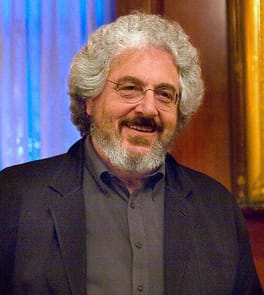
Photo: Justin Hoch photographing for Hudson Union Society / CC BY 2.0 (source: Wikimedia Commons)
Harold Ramis was born on November 21, 1944 in Chicago, Illinois, United States and was credited as a comedian, film director and writer. Harold Ramis died on February 24, 2014 at the age of 69. Schooling on record includes Senn High School and Washington University in St. Louis. Awards on record include BAFTA Award for Best Original Screenplay (1994) and Earle Grey Award (1995). Notable works include Ghostbusters and Ghostbusters II.
My Take
Harold Ramis is, to me, the rare comedy mind who succeeded at every link in the chain: performing, writing, and directing. Plenty of people remember Egon Spengler's deadpan in Ghostbusters, but I think his real genius was structural—he built jokes on ideas, and his BAFTA-winning screenplay work proved comedy could carry real philosophy without losing its laughs. What moves me is how generous his humor feels; it never punches down, it invites you in. When he died in 2014, the outpouring from filmmakers and fans confirmed what I had long suspected: modern American comedy quietly runs on blueprints he drafted in Chicago.
This take was written by generative AI, one per person, from publicly reported facts (editorial policy). It is a reading of the record, not reporting.
1. Profile
- Name (English)
- Harold Ramis
- Name (Japanese)
- ハロルド・ライミス
- Reading
- はろるど・らいみす
- Born
- November 21, 1944 – February 24, 2014
- Origin
- Chicago, Illinois, United States
- Occupation
- comedian / film director / writer / screenwriter / television actor
- Zodiac / Chinese zodiac
- Scorpio / Monkey
2. Background
- High school
- Senn High School
- University
- Washington University in St. Louis
Awards & achievements
- 1994 BAFTA Award for Best Original Screenplay
- 1995 Earle Grey Award
3. Works & records
Filmography / notable works
| Category | Title |
|---|---|
| Notable work | Ghostbusters |
| Notable work | Ghostbusters II |
4. Links
- Official sitehttp://www.haroldramis.com
- Wikipedia (English)https://en.wikipedia.org/wiki/Harold%20Ramis
- Wikipedia (Japanese)https://ja.wikipedia.org/wiki/%E3%83%8F%E3%83%AD%E3%83%AB%E3%83%89%E3%83%BB%E3%83%A9%E3%82%A4%E3%83%9F%E3%82%B9
- Wikidatahttps://www.wikidata.org/wiki/Q286890
5. About this entry
Tags
- Last updated
Facts are limited to publicly available information up to 2024; non-public or unconfirmed items are omitted. English text is machine-assisted (facts translated by Sonnet, "My Take" written by Opus 4.8). The Japanese page is the source of record.
Frequently asked questions
When was Harold Ramis born?
Born November 21, 1944.
When did Harold Ramis die?
Died February 24, 2014, aged 69.
Where was Harold Ramis from?
Harold Ramis was from Chicago, Illinois, United States.
What did Harold Ramis do?
Harold Ramis worked as comedian, film director, writer, screenwriter, television actor.
What was Harold Ramis known for?
Notable works include Ghostbusters, Ghostbusters II.
Comedian — see all → · Film director — see all → · More people from the United States →