70% Film: How Hideo Kojima Turned Play Into Art
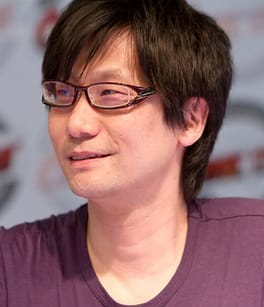
A man who makes video games says it with a completely straight face: "Seventy percent of my body is made of film." Most people would treat that as a joke. Kojima turned it into a creative philosophy. Hideo Kojima is Japan's most celebrated video game creator, a director, screenwriter, and producer whose work has reshaped what games can be.
Born in Setagaya, Tokyo, in 1963, the boy who grew up inside movies and books would go on to invent an entirely new kind of play, the stealth game, and to dissolve the border between cinema and the controller.
This is the story of how a single Konami employee became the master of a studio bearing his own name, and ultimately earned the highest honor the British Academy of Film and Television Arts can give.
A Boy Raised by Movies
Hideo Kojima was born on August 24, 1963, in Setagaya, Tokyo. His family later moved through Chigasaki in Kanagawa, Ibaraki in Osaka, and Kawanishi in Hyogo.
From an early age, films and books sat at the center of his world. That sensibility, an obsession with story and visual expression, became the wellspring of his signature approach: telling games as if they were cinema. He is reported to have studied in a faculty of economics at university, but his heart always belonged to the stories beyond the screen.
"Seventy percent of my body is made of film" is no mere metaphor. The man himself is built from every movie he watched, every book he read, every piece of music he absorbed.
The Invention of Stealth
In 1986, Kojima joined Konami. The following year, in 1987, he released his directorial debut, Metal Gear, for the MSX2.
What made it revolutionary was its core idea: not defeating enemies, but avoiding being seen by them. While the games of the era competed on the thrill of overpowering opponents, Kojima turned the tension of hiding itself into play. The entire genre we now call the stealth game began here.
In 1988 came Snatcher, which boldly imported cinematic staging and rich narrative into the medium, pushing the boundaries of the kind of stories a game could tell.
The Moment the World Turned
In 1998, the work that would broadcast Kojima's name across the globe arrived: Metal Gear Solid for the PlayStation.
Its meticulously crafted infiltration gameplay, its film-like camera work and cutscenes, its dense and weighty story, all combined to make players feel less like they were playing a game and more like they had become the hero of a movie. It became a worldwide phenomenon, securing Kojima's place among the world's foremost creators.
In 2001, Newsweek named him one of "10 People Who Will Change the World." From there, his series kept evolving through Metal Gear Solid 2, 3, 4, and finally V: The Phantom Pain in 2015.
Starting Over from Zero
In 2015, Kojima left Konami Digital Entertainment after long years there, and that same year founded Kojima Productions, a studio carrying his own name.
To leave a stable giant later in life and build your own castle from nothing takes extraordinary resolve. Then, in 2019, the new studio's first title, Death Stranding, launched for the PlayStation 4.
Set in a ruined America and built around the simple act of delivering packages, the game baffled people when first announced. But once it was in players' hands, its story about human connection moved audiences worldwide. At The Game Awards 2019 it won both Best Game Direction and Best Score & Music.
A Master and an Ordinary Film Fan
In 2020, Kojima received the BAFTA Fellowship, the highest honor the academy bestows. In 2022, he was awarded Japan's 72nd Minister of Education Award for Fine Arts in the media arts category.
Yet for all his stature, his everyday self is startlingly approachable. On Twitter and Instagram he posts almost daily about the films he has seen and the books he has read, looking less like a global icon than a pure, devoted movie lover. Guinness World Records has recognized him as the game director with the most followers on both Twitter and Instagram.
Even crowned a god of games, he still faces the screen each day as a single member of the audience.
A man who makes games declares that 70% of his body is made of film, and because he poured that cinema obsession wholesale into games, the world looked up and gasped, "What is this movie I'm playing?"
The nerve to walk away from a corporation and stake everything on his own name, the closeness of remaining a fan even after becoming a master, the imagination to make people weep over a game about carrying parcels: all of it runs at an angle no ordinary mind can predict. For anyone who loves games, simply living in the same era and waiting to see his next move is a luxury beyond price.