The Man Who Turned His Back ── and Made the World Turn to Watch: How Hideo Nomo Opened the Pacific Door Alone
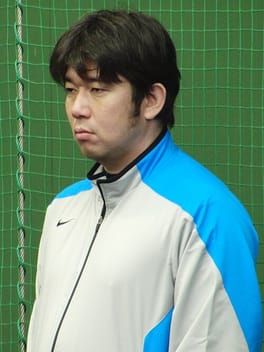
He would turn his back to the catcher, coil his entire torso, and then unleash the ball as if from nowhere. Anyone seeing that "Tornado" windup for the first time worried, just for a second, that something was wrong. Then the batter swung at empty air, and the crowd roared.
Born in Minato Ward, Osaka, in 1968, Hideo Nomo reached the summit of Japanese baseball and then stepped, entirely alone, onto a path no one believed in: Major League Baseball. There he won Rookie of the Year, threw no-hitters in both leagues, and silenced the world with results rather than words.
Today, Japanese players cross the Pacific as a matter of course. The door they walk through was pried open by this one quiet man from Osaka.
From an Osaka technical high school to a pitching quadruple crown
Nomo graduated from Osaka Prefectural Seijo Technical High School and did not attend university. After playing corporate-league baseball, he was selected first overall by the Kintetsu Buffaloes in the 1988 draft. That same year, he represented Japan at the Seoul Olympics, helping the team to a silver medal.
Then came 1990, his first professional season — and the numbers read like nothing a rookie should produce. He led the Pacific League in wins (18), ERA, strikeouts, and winning percentage, sweeping the pitcher's four-crown titles. He took Rookie of the Year, MVP, and the prestigious Sawamura Award all at once. Few pitchers have ever swept so many honors in a debut year. The forkball that exploded out of that strange tornado motion was already untouchable for Japanese hitters.
A "voluntary retirement" that was really a challenge
In 1994, Nomo left the Buffaloes under the formal designation of "voluntary retirement." But retirement was never his intent — the real goal was Major League Baseball.
At the time, almost no one believed a Japanese player could succeed in the majors. Since Masanori Murakami had crossed over in the 1960s, no Japanese player had truly taken on the challenge. To abandon a secure standing in Japan and leap, alone, into the unknown of the big leagues was a gamble and an act of conviction. He said little. He simply carried his tornado across the Pacific.
"Nomomania" shakes Dodger Stadium
In 1995, he joined the Los Angeles Dodgers, taking the mound as only the second Japanese-born major leaguer since Murakami.
The result was dramatic: 13 wins, 6 losses, 236 strikeouts. He led the National League in strikeouts and was named National League Rookie of the Year. American media went wild for his singular form and overwhelming strikeout totals, coining the word "Nomomania." The assumption that Japanese players couldn't compete — he overturned it in a single season.
No-hitters in both leagues
In 1996, at the high-altitude, hitter-friendly Coors Field, Nomo threw the first no-hitter ever recorded at that ballpark — an achievement in what is considered the most hostile environment imaginable for a pitcher.
Then in 2001, as a member of the Boston Red Sox, he threw another no-hitter, this time in the American League — becoming only the fourth pitcher in MLB history to do so in both leagues. In 2003 he became the first Japanese pitcher to reach 100 career MLB wins, and in 2005 the first to reach 200 combined Japan-MLB wins. By the record book alone, he was unmistakably a pioneer.
What a quiet man left behind
In 2008, after a final stint with the Kansas City Royals, Nomo retired. From 1990 to 2008, his long journey carried him across nine clubs in Japan and the United States.
In 2014 he was inducted into the Japanese Baseball Hall of Fame, and that same year received the Baseball Pioneer Award. After retiring, he founded NOMO Baseball Club to develop young players. He married Kikuko in 1991, and their eldest son once worked as an interpreter for the Hokkaido Nippon-Ham Fighters. His reluctance to talk about his private life remained, just as it had during his playing days.
Hideo Nomo was never a man who moved people with words. What he spoke with were strikeouts, wins, and no-hitters. In an era when no one believed success was possible, he crossed the Pacific alone — and that courage may be his greatest feat of all.
Today, countless Japanese players shine in the majors. Every one of them passes through the door this quiet Osaka man pried open by himself. He turned his back, and then made the whole world turn to watch.