When Did His Melodies Become Our Memories? The Phenomenon of Joe Hisaishi
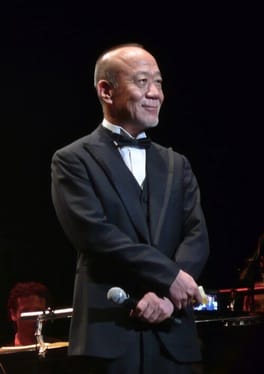
A Studio Ghibli film begins on television. Within the first few bars, we are already standing at the threshold of the story. The wind rises, clouds drift, someone looks up at the sky—and somehow, with sound alone, that whole scene comes to life. This is the work of Joe Hisaishi, born Mamoru Fujisawa in 1950 in Nakano, Nagano. Over half a century, he has written melodies that reach the deepest layers of the Japanese heart.
How did a young graduate of Kunitachi College of Music come to leave his mark on the world through film scoring—a field once treated almost as a supporting role? The answer lies not only in talent, but in a single encounter and a partnership that endured for decades.
A Quiet Beginning in Composition
Hisaishi attended Nagano Prefectural Suzaka High School before entering the composition department of Kunitachi College of Music, graduating in 1974. At this point he was far from a household name. He immersed himself in contemporary and minimalist music, searching for his own voice.
The turning point came in 1981 with his first produced album, MKWAJU. The following year he founded his own management office, Wonder City, building a foundation for his career. His stage name, incidentally, is a playful nod to Quincy Jones—a small wink of mischief hidden behind a serious face.
The Film That Changed Everything: Nausicaä
In 1984, Hayao Miyazaki's Nausicaä of the Valley of the Wind arrived, and Hisaishi's score for it brought his name to a wide audience. His melodies—accompanying a story of ruin and rebirth in a vast toxic jungle—lodged themselves deep in viewers' hearts.
So began one of the most remarkable long-term collaborations in Japanese film history. My Neighbor Totoro (1988), Princess Mononoke (1997), Spirited Away (2001), Howl's Moving Castle (2004), Ponyo (2008), The Wind Rises (2013)—and finally The Boy and the Heron (2023). Decades of accumulated trust gave the music a lived-in warmth that never grows stale.
Another Face: The Stillness of Takeshi Kitano's Films
To see only Ghibli is to see half of Joe Hisaishi. His work with director Takeshi Kitano forms another essential pillar of his career.
In A Scene at the Sea, Sonatine, and the 1997 film Hana-bi, Hisaishi offered music utterly unlike Ghibli's brightness—pared down, spare, full of silence. Hana-bi earned him the Japan Academy Film Prize for Best Music. He won that same award repeatedly: in 1992, 1993, 1994, 1999, and again in 2014. His refusal to be confined to a single style is exactly where his strength lies.
Passion at the Podium: Pianist and Conductor
At the piano, his expression is calm. But the moment he takes up the baton, he transforms into a man of pure passion, leading an orchestra with his whole body. Composer, arranger, conductor, and pianist all at once—he is a rare and complete musician.
"Image and music are equals," he has said of film scoring. Rather than subordinate music to picture, he treats it as an equal form of expression. That stance is what has lifted his work from mere background music to the very soul of the films themselves.
A Career the World Came to Honor
In 2009 he received the Medal with Purple Ribbon, and that same year Departures, to which he contributed as composer, won the Academy Award for Best Foreign Language Film. His recognition was never confined to Japan.
In 2024, The Boy and the Heron earned him the International Film Music Critics Association Award for Best Original Score in an Animated Feature, along with the Annie Award's Windsor McCay Award for outstanding contribution to the art of animation. That same year he was appointed Composer-in-Association of Britain's prestigious Royal Philharmonic Orchestra. Past seventy, his stage only continues to widen across the world.
From Nausicaä's wordless "la-la-la" to the giddy stomp of Ponyo's footsteps, Joe Hisaishi's melodies have quietly taken up residence in the very center of our memory—never pushy, yet impossible to forget.
His wife was a classmate from music college, and his daughter Mai is a singer; within this family of musicians he still writes new works and conducts around the globe. Slowly but without interruption, he keeps leaving the world a treasure too vast for any of us to take in over a single lifetime.