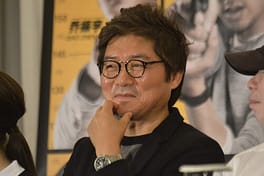
Photo: Kinocine PARKJAEHWAN / CC BY-SA 4.0 (source: Wikimedia Commons)
Kang Je-gyu was born in Masan, South Chungcheong, South Korea on December 23, 1962. Kang Je-gyu is a film director and screenwriter. The age as of 2026 is 63. Schooling on record includes Chung-Ang University. Recorded honors include Blue Dragon Film Award for Best New Director (1996).
My Take
Kang Je-gyu is, to me, one of the architects of modern Korean cinema's commercial muscle. Shiri in 1999 proved a homegrown blockbuster could go toe-to-toe with Hollywood, and Taegukgi a few years later showed he could pair that scale with real emotional weight. His Best New Director win at the Blue Dragon Awards now reads like an early signal of what was coming. I admire filmmakers who can make a film both massive and human at once, and his war epics manage exactly that balance. He helped build the runway that the entire Korean wave later took off from.
This take was written by generative AI, one per person, from publicly reported facts (editorial policy). It is a reading of the record, not reporting.
1. Profile
- Name (English)
- Kang Je-gyu
- Name (Japanese)
- カン・ジェギュ
- Reading
- かん・じぇぎゅ
- Born
- December 23, 1962 (age 63)
- Origin
- Masan, South Chungcheong, South Korea
- Occupation
- film director / screenwriter
- Zodiac / Chinese zodiac
- Capricorn / Tiger
2. Background
- University
- Chung-Ang University
Awards & achievements
- 1996 Blue Dragon Film Award for Best New Director
3. Links
- Wikipedia (English)https://en.wikipedia.org/wiki/Kang%20Je-gyu
- Wikipedia (Japanese)https://ja.wikipedia.org/wiki/%E3%82%AB%E3%83%B3%E3%83%BB%E3%82%B8%E3%82%A7%E3%82%AE%E3%83%A5
- Wikidatahttps://www.wikidata.org/wiki/Q488294
4. About this entry
Tags
- Last updated
Facts are limited to publicly available information up to 2024; non-public or unconfirmed items are omitted. English text is machine-assisted (facts translated by Sonnet, "My Take" written by Opus 4.8). The Japanese page is the source of record.
Frequently asked questions
When was Kang Je-gyu born?
Born December 23, 1962 (age 63).
Where is Kang Je-gyu from?
Kang Je-gyu is from Masan, South Chungcheong, South Korea.
What does Kang Je-gyu do?
Kang Je-gyu works as film director, screenwriter.
Film director — see all → · Screenwriter — see all → · More people from South Korea →