The Man Who Spoke With His Eyes: The Quiet Force of Ken Ogata
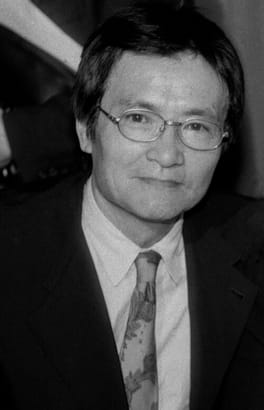
There are actors who tighten the whole frame the instant they step into it. Ken Ogata was one of them.
A gentle father, or a man whose true intentions you simply could not read—he could live either one with nothing more than his eyes. He didn't need a line of dialogue to pin you to your seat. This is the story of one of Japan's most acclaimed actors, a man who held the front rank of its film and television for nearly half a century.
Born in Ushigome
Ken Ogata was born on July 20, 1937, in Ushigome Ward, Tokyo Prefecture—in the area of present-day Shinjuku. He was a Cancer, born in the year of the Ox, and records show he attended Tokyo Metropolitan Takebaya High School.
He belonged to a generation that came into the world in prewar Tokyo and lived through the vast transformations of postwar Japan. In time, his name would resonate on both the stage and the screen.
Living the Role
Whenever people talk about Ogata's acting, they come back to his eyes. He could say everything without saying a word—anger, tenderness, fathomless scheming, all of it held in a single gaze.
The doting father, the unreadable and frightening man: he inhabited roles of enormous range with the same conviction. He didn't so much perform a character as become one, and from that came the force that left audiences unable to move.
A Craftsman Who Never Wore His Honors
The accolades attest to his command of the craft. The Japan Academy Prize, and its award for Best Actor. The Blue Ribbon Award for Best Actor, twice, in 1979 and again in 1984. The Golden Arrow Award and the Mainichi Film Award for Best Actor. In 2000 he was decorated with the Medal with Purple Ribbon.
And yet, by all accounts, Ogata never seemed to wear any of it. Rather than be adorned by his prizes, he simply kept facing his roles, quietly and without fuss. It was the bearing of a master craftsman.
Stillness as Performance
He rarely shouted; often he barely moved. A flicker of expression, or a stance held perfectly still—into these he folded an entire interior life. The heart of Ogata's art lay in that stillness.
The plain fact that he spent decades on the front line, living one varied role after another, tells you this was no passing gift. There was a real, durable weight to it, untouched by fashion.
On October 5, 2008, Ken Ogata passed away, at the age of seventy-one.
We will never get a new performance of his—that acting that said everything through the eyes alone. The absence still stings. But the memory of his quiet force will go on living, surely, in everyone who watched him.