Stealing the Scene from the Corner of the Frame: Kiki Kirin, the Actress Who Never Lied
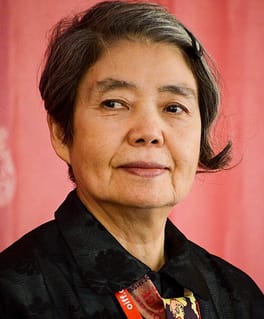
She could simply sit in the corner of the frame and mutter a single line, and somehow walk off with the entire scene. Kiki Kirin had that kind of quiet magic. She never raised her voice or reached for grand gestures, yet any scene she was in gradually became her world.
Born Keiko Uchida in the Kanda district of Tokyo in 1943, she began her career as Yuki Chaho and later rose, under the name Kiki Kirin, to become one of Japan's defining character actresses. Across more than five decades, she refused to speak a single empty pleasantry, and yet she left audiences with a strange, lingering warmth.
Her life had the density of several stories braided together: auctioning off her own stage name on live television, staying married to a husband she lived apart from for decades, and continuing to work calmly while cancer spread through her body.
Yuki Chaho and the Bungakuza Start
Her acting life began in 1961 under the name Yuki Chaho. She entered the drama research institute of the Bungakuza Theater Company and stepped into the world of television drama. Serving as an attendant to the great actress Haruko Sugimura is said to have laid the foundation for her later craft.
The turning point came in 1964, when a regular role in Seven Grandchildren, starring Hisaya Morishige, brought her sudden popularity. Her unusual gift for playing characters far older than herself astonished those around her early on. She left Bungakuza in 1966 and, in 1967, founded her own management company, Kirikan. The instinct to stand on her own, unbound by any organization, was already at her core.
Through TV dramas like Jikan desu yo and Terauchi Kantaro Ikka, she put down deep roots in living rooms across Japan as a supporting player of overwhelming presence. The supporting actress who outshines the lead — that title was hers from the start.
The Woman Who Auctioned Her Name
No account of Kiki Kirin is complete without the legendary episode of 1977. On a television variety program's auction segment, she put her own stage name, Yuki Chaho, up for sale, parted with it, and reinvented herself as Kiki Kirin.
For a performer, a stage name is a banner, an asset, an identity. The idea of selling it off on a variety show simply does not arise from ordinary instincts. The stunt revealed how little she clung to her own image, and how unshakable her nerve was. She never grasped at fame or persona — a stance that ran through her acting for the rest of her life.
Her private life was equally unconventional. She married the musician Yuya Uchida in 1973, only to live separately soon after. Yet she never dissolved the marriage, remaining his wife until the very end. Her daughter, Yayako Uchida, is an essayist and actress married to the actor Masahiro Motoki. It was a life that refused to fit ordinary frames, and yet held to its own consistent logic.
From Character Actress to One of a Kind
She appeared in Fujifilm commercials from 1978 for forty years, and a 1980 spot in which her line "Beautiful people come out more beautiful, and the others..." drew the shop clerk's reply "...come out as they are" became a national catchphrase. The exchange still lingers in countless memories.
Her acting recognition only grew more solid with the years. She won the Arts Encouragement Prize from the Minister of Education for the 1986 NHK drama Hanegoma, and in 2008 took the Japan Academy Prize for Best Actress for Tokyo Tower: Mom and Me, and Sometimes Dad. Further top awards followed for Villain and Chronicle of My Mother, and the nation honored her with the Medal of Honor with Purple Ribbon and the Order of the Rising Sun.
In her later years she became a fixture in Hirokazu Kore-eda's films: Like Father, Like Son, Our Little Sister, and Shoplifters. The sharp-tongued grandmother who somehow brings you to tears — that exquisite texture was a magic only she could conjure.
Death, Too, Is Part of Life
In 2005 she was found to have breast cancer and had surgery. The disease eventually spread throughout her body, and in 2013 she revealed in an awards speech that she had cancer all over her body. Yet she never loudly framed it as a tragedy. With a calm, unhurried air, she kept standing on set to the very end.
In 2018, Shoplifters, in which she played the grandmother Hatsue, won the Palme d'Or at the Cannes Film Festival. That same year, on September 15, as the world celebrated a film carrying her performance, Kiki Kirin died quietly at her home in Shibuya, Tokyo, aged 75. In 2019, the Japan Academy Prize for Best Supporting Actress was awarded to her posthumously for that role.
To the last, she held to her own words, her own feet, her own way. Rather than shrinking in fear of death, she accepted even death as part of life and kept performing without fuss. That image, somehow, makes the viewer sit up a little straighter.
She never offered a single empty pleasantry, and yet, when her performances end, you find a warmth has settled deep in your chest. That was the almost unfair charm of Kiki Kirin. Sharp-tongued, breezy in manner, and yet she understood the true texture of human beings better than anyone.
In that one line muttered from the corner of the frame, an entire life was contained. Kiki Kirin never lied. And so her presence still breathes, quietly and surely, in the memory of so many.