The Quiet Man Who Became Japan's Most Talkative Wanderer: The Miracle of Kiyoshi Atsumi
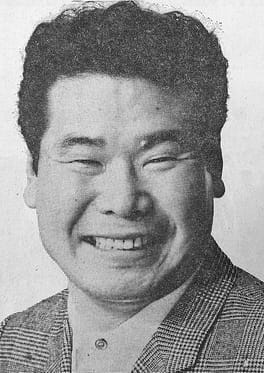
A man shuffles onto the screen in a battered hat and a belly-warmer, a worn leather suitcase in hand, and launches into his patter. The audience's faces soften, and soon they are swept up in a tide of laughter and tears. This is Torajiro Kuruma, better known as Tora-san, the most beloved drifter in the history of Japanese cinema. The actor who brought him to life was Kiyoshi Atsumi.
Yet the man who created this cheerful, motor-mouthed wanderer was his complete opposite. Famously private, quiet to the point of being a recluse, Atsumi guarded his real life fiercely, rarely speaking in public and refusing to let the world see him grow frail in his final years. The vast gap between the role and the man was the very source of his greatness.
Born in 1928 in Shitaya, Tokyo, and gone in 1996 at the age of 68, Atsumi left behind a body of work crowned by a Guinness World Record: forty-eight films in which a single actor played a single role longer than anyone else ever had.
Beginnings Under the Lights of Asakusa
Kiyoshi Atsumi, born Yasuo Tadokoro, entered show business through the postwar streets of Asakusa's Rokku district. In 1951 he began performing as a resident comedian at a strip theater, far from any glamorous path to film stardom. His start was in the slapstick interludes between acts.
In 1953 he moved to the Asakusa France-za, then a gathering place for the country's finest comic performers. On its stage he absorbed the timing, the facial play, and the physical instinct it takes to make an audience laugh. The exquisite comic timing he would later display on television and in film was forged entirely on these Asakusa boards.
Then, in 1954, tuberculosis struck, forcing him into a long recovery. A career that had seemed to be gathering momentum suddenly stalled, and he spent some of his most promising years on a sickbed.
From Comedian to Actor
Having beaten his illness, Atsumi made his film debut in 1958. But the work that lifted him from mere funnyman to genuine actor was the 1963 film Haikei Tenno Heika-sama, directed by Yoshitaro Nomura. Playing an uneducated but pure-hearted soldier, he made audiences laugh and ache at the same moment, announcing himself as a rare performer who could let sorrow seep through comedy.
Holding laughter and tears in a single instant became the blueprint for the national character he would later embody. Tora-san was loved not simply because he was funny. He was a clumsy show-off who made others laugh while never finding happiness himself, and no one understood that human ache more deeply than Atsumi.
Twenty-Eight Years, Forty-Eight Films
The turning point came in 1968, when Atsumi played Torajiro Kuruma in a Fuji TV drama. The following year, director Yoji Yamada's first film installment was released, and Tora-san swiftly became a spiritual hometown for the Japanese public.
Over the next twenty-eight years, forty-eight films were made. There was the warm interplay with Chieko Baisho as his sister Sakura, the doomed romance with a different "Madonna" in each town, and the dumpling shop in Shibamata to which he always returned. The structure repeated, yet far from tiring of it, audiences awaited each new chapter every year. A single line, "Don't say that, it ruins everything," passed down across generations.
The achievement earned a Guinness World Record as the longest film series featuring the same lead actor. To carry one role for a lifetime is an actor's most fortunate and most punishing path, and Atsumi walked it to the very end.
The Hidden Face
For all his national fame, Atsumi never talked about himself. He married Masako Takenaka in 1969 but shielded his family from public view. His hobbies were travel to Africa and cooking sweet potatoes, a quiet, introspective self that scarcely matched the breezy wanderer on screen.
The Medal with Purple Ribbon, the Mainichi Art Award, numerous Best Actor honors. Even as the accolades piled up, he refused to puff himself up in the spotlight. His motto was "Press on, hold firm, but never be arrogant," and he lived exactly that way, never boasting, simply living each role to the fullest.
On August 4, 1996, Kiyoshi Atsumi died of renal cell carcinoma at the age of 68. To the last he kept the depth of his illness from those around him, determined that his audience would never see Tora-san weakened, holding to that quiet stubborn dignity. He was posthumously awarded Japan's People's Honor Award.
A silent man played the country's most talkative one. A man who never revealed his true face in public became its most beloved "little brother." That contradiction was the heart of his art, a Showa-era miracle unlikely ever to be repeated. Beneath the skies of Shibamata, the wandering Tora-san is traveling still.