The Man Who Stood Up Straight for Justice: Kotaro Satomi, Pillar of the Japanese Period Drama
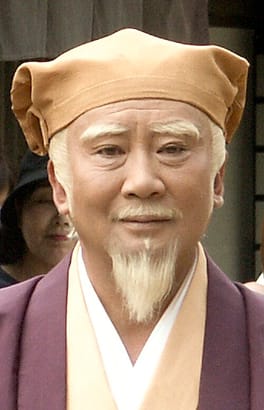
Say the words "Japanese period drama" and, for a great many people, a single actor's face appears at once. Draw the sword and the choreography snaps cleanly into place; speak a line in that low, weathered voice and even the villain on the far side of the screen seems ready to sit up straight. For decade after decade, it was Kotaro Satomi who carried that presence into living rooms across Japan.
Born on November 28, 1936, in Tokyo and raised in Fujinomiya, Shizuoka Prefecture, Satomi has worn several titles at once: actor, voice actor, and singer. But above all he is remembered as a star of the jidaigeki, the samurai-era drama. Working only from what is publicly known, this piece traces his long journey as a story worth retelling.
A Story That Began at the Foot of Mount Fuji
Kotaro Satomi was born in Dogenzaka, Shibuya, Tokyo, and grew up in Fujinomiya, a town in Shizuoka Prefecture in the shadow of Mount Fuji. Born in 1936, he grew up across turbulent years that ran from the prewar era through wartime and into the upheaval of the postwar period. The arc itself, from a provincial town to a face known across the nation, has the shape of a story.
His father was sent to the war in China when he was eight months old and died there, and in 1956 he passed Toei's third New Face audition and joined the studio. A young man from the provinces gave himself to the craft and stood at the front rank for many years. It is not hard to imagine the quiet, unseen effort that such a path demanded.
The Period Drama as a Way of Life
What made Satomi's name permanent was, above all, the period drama. The swordplay, the dignified bearing, the righteous roles that bring evil to justice. These elements layered together so completely that, across generations, he became the very image of "the good guy" in the minds of countless viewers.
A jidaigeki is not simply a matter of swinging a blade. It demands beauty of movement, timing in the delivery of lines, and a dignity that must live inside the role. For many years, Satomi embodied that difficulty. When he stepped onto the screen, a reassurance settled over the room: justice would win again tonight.
That Weathered Voice as a Weapon
No account of Satomi the actor can overlook his voice. Low, weathered, and yet warm, it gives weight to every line and a quiet power that makes a listener straighten up without thinking. His work as a voice actor surely rests on that very instrument.
At 173 centimeters, he kept his spine ramrod straight even as the years piled up, never letting his standing posture slacken. For an actor of the samurai era, bearing translates directly into conviction. To remain a handsome, commanding figure into old age was itself an expression of his pride in the craft.
The Actor Who Sings
Satomi is not only an actor and voice actor; he also carries the face of a singer. His resonant voice, continuous with the gravelly authority of his line readings, delivers a wholly different pleasure to those who hear it.
When mastering even a single field is hard enough, he has juggled acting, voice work, and song. That is less a matter of versatility than of sheer range as a performer. To act, to lend a voice, and to sing: all three flow naturally together within the one performer named Kotaro Satomi.
From Fujinomiya in Shizuoka out into the wider world, Kotaro Satomi spent decades playing Japan's defender of justice. This Sagittarius-born actor stands like a load-bearing pillar beneath the jidaigeki, a uniquely Japanese tradition he has sustained across generations.
Even in age he keeps his spine straight, speaks for justice in that weathered voice, and now and then sings out clear and full. His presence quietly teaches us how much it means to have someone stay at the front rank for so long. It is only when you try to picture the screen without him that you grasp how large he truly is, a rare actor indeed.