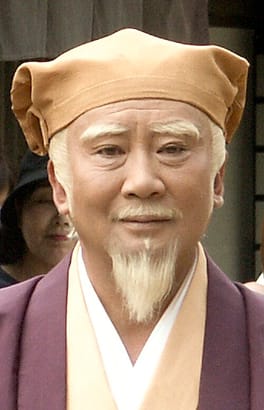
Photo: Fg2 / Public domain (source: Wikimedia Commons)
My Take
If you grew up with Japanese TV, Kōtarō Satomi is basically the sound and posture of the samurai era, the guy whose face means "the good guys win tonight." I love that he made a whole career out of jidaigeki: the clean swordplay, the upright bearing, that warm gravelly voice that could shame a villain into sitting up straight. There's something deeply reassuring about an actor who plays justice for decades and somehow keeps his spine ramrod and his charm fully loaded into his eighties. And then he turns around and sings, properly sings, which feels almost greedy. A kid from Fujinomiya who became a national fixture of honor and decency, he's the kind of dependable presence you don't fully appreciate until you imagine the screen without him.
This take was written by generative AI, one per person, from publicly reported facts (editorial policy). It is a reading of the record, not reporting.
Story
The Man Who Stood Up Straight for Justice: Kotaro Satomi, Pillar of the Japanese Period Drama
Overview
Kōtarō Satomi is a Japanese actor, voice actor, and singer born on November 28, 1936, in Tokyo and raised in Fujinomiya, Shizuoka Prefecture. He is widely recognized as a veteran presence in Japanese period dramas, known for his commanding screen presence and resonant voice. His career has spanned multiple decades, establishing him as one of the most enduring figures of his generation in Japanese entertainment. Born Kunitoshi Sano, he joined Toei through its New Face audition in 1956.
1. Profile
- Name (English)
- Kōtarō Satomi
- Name (Japanese)
- 里見浩太朗
- Reading
- さとみ こうたろう
- Born
- November 28, 1936 (age 89)
- Origin
- Fujinomiya, Shizuoka, Japan
- Height
- 173cm
- Occupation
- Actor / Voice Actor / Singer
- Zodiac / Chinese zodiac
- Sagittarius / Rat
- Blood type
- A
- Active years
- 1957 -
2. Relationships
- Spouse
- Non-celebrity woman (previously divorced)
3. Works & records
Works summary
- Appearances
- 381 (1957–2026)
- By year (titles with a known year)
- 1957: 4, 1958: 30, 1959: 22, 1960: 27, 1961: 25, 1962: 13, 1963: 4, 1964: 6, 1965: 4, 1966: 7, 1967: 8, 1968: 8, 1969: 10, 1970: 14, 1971: 7, 1972: 2, 1974: 2, 1975: 1, 1976: 1, 1978: 2, 1979: 2, 1980: 1, 1981: 1, 1982: 3, 1983: 3, 1984: 1, 1985: 2, 1986: 1, 1987: 2, 1988: 2, 1989: 1, 1990: 1, 1991: 3, 1992: 5, 1993: 2, 1994: 3, 1995: 6, 1996: 9, 1997: 6, 1998: 5, 1999: 5, 2000: 5, 2001: 5, 2002: 3, 2003: 1, 2004: 3, 2005: 2, 2006: 4, 2007: 2, 2008: 3, 2009: 2, 2010: 1, 2011: 2, 2012: 5, 2013: 6, 2014: 6, 2015: 7, 2016: 7, 2017: 1, 2018: 5, 2019: 4, 2020: 4, 2021: 1, 2023: 2, 2025: 1, 2026: 2, year unknown: 36
- Debut work
- 上方演芸 底抜け捕物帖
Filmography / notable works
| Category | Title | Year |
|---|---|---|
| Film | 劇場版 旅人検視官 道場修作 | 2026 |
| Drama | 無用庵隠居修行10 | 2026 |
| Drama | Berabou | 2025 |
| Drama | Dousuru Ieyasu | 2023 |
| Drama | ホリデイ〜江戸の休日〜 | 2023 |
| Drama | BS時代劇 小吉の女房2 | 2021 |
| Drama | 日曜プライム おかしな刑事22 | 2020 |
| Drama | 帯ドラマ劇場 やすらぎの刻〜道 | 2020 |
| Drama | Kyouen NG | 2020 |
| Drama | 十三人の刺客 | 2020 |
| Drama | 執事 西園寺の名推理2 | 2019 |
| Drama | BS時代劇 小吉の女房 | 2019 |
| Drama | よつば銀行 原島浩美がモノ申す!〜この女に賭けろ〜 第2話 | 2019 |
| Drama | スローな武士にしてくれ〜京都 撮影所ラプソディー〜 | 2019 |
| TV movie | 名奉行!遠山の金四郎 | 2018 |
| Drama | しまっこさん | 2018 |
| Drama | 犬神家の一族 | 2018 |
| Drama | 特捜9 | 2018 |
| Drama | Butler Saionji's Great Reasoning | 2018 |
| Drama | トットちゃん! | 2017 |
| Drama | 名探偵キャサリン〜消えた相続人〜 | 2016 |
| Drama | ミステリー作家・朝比奈耕作シリーズ・花咲村の惨劇 | 2016 |
| Drama | 金曜8時のドラマ / ヤッさん〜築地発!おいしい事件簿〜 | 2016 |
| Drama | 水曜ミステリー9 / 金沢のコロンボ3 | 2016 |
| Drama | Xmasミステリー特別企画 / ホテル警備隊 田辺素直 | 2016 |
| Drama | 水曜ミステリー9 / 刑事吉永誠一 ファイナル | 2016 |
| Anime | なぜ生きる -蓮如上人と吉崎炎上- | 2016 |
| Film | April Fools | 2015 |
| TV movie | 水戸黄門スペシャル | 2015 |
| TV movie | 大江戸捜査網2015〜隠密同心、悪を斬る! | 2015 |
| Drama | 警視庁捜査一課9係 Season10 | 2015 |
| Drama | Meitantei Catherine | 2015 |
| Drama | BARレモン・ハート 第3話 | 2015 |
| Drama | 黒蜥蜴 | 2015 |
| Drama | リーガルハイ・スペシャル | 2014 |
| Drama | Meitantei Kamidzu Kyōsuke | 2014 |
| Drama | 水曜ミステリー9 / ドクターハート 薮田公介の事件カルテ | 2014 |
| Stage | 天才執事ジーヴス | 2014 |
| Documentary | 甲冑の国 | 2014 |
| CM | 絶対もらえる、が好き!篇 | 2014 |
| Drama | ホゴカン 熱血保護司・村雨晃司の事件簿 | 2013 |
| Drama | シリーズ6 | 2013 |
| Drama | リーガル・ハイ スペシャル | 2013 |
| Drama | リーガルハイ | 2013 |
| Drama | スペシャルドラマ・必殺仕事人2013 | 2013 |
| Stage | 真田十勇士 | 2013 |
| Film | A Chorus of Angels | 2012 |
| Drama | さすらいのプラチナワゴン〜歌手・美波丈太朗の事件簿〜 | 2012 |
| Drama | ドラマスペシャル・濃姫 | 2012 |
| Drama | Hanchō 〜 Keishichō Asakahan 〜 | 2012 |
| Drama | Legal High | 2012 |
| Variety show | NHK Song Concert | 2011 |
| Variety show | ごきげん歌謡笑劇団 | 2011 |
| Drama | 龍馬伝 第4話〜第6話、第9話〜第10話、第16話〜第17話 | 2010 |
| Drama | 萬屋長兵衛の隅田川事件ファイル 其ノ弐 | 2009 |
| Stage | 薫風あばれ獅子 | 2009 |
| Drama | 土曜ドラマ・フルスイング | 2008 |
| Drama | 名犬フーバーの事件簿 | 2008 |
| Drama | 萬屋長兵衛の隅田川事件ファイル | 2008 |
| Stage | 水戸黄門ファミリー 歌とゆかいなトークショー | 2007 |
4. Links
- Wikipedia (Japanese)https://ja.wikipedia.org/wiki/%E9%87%8C%E8%A6%8B%E6%B5%A9%E5%A4%AA%E6%9C%97
- Wikidatahttps://www.wikidata.org/wiki/Q901575
5. About this entry
Tags
- Last updated
Only publicly available facts are listed; non-public or unconfirmed items are omitted. Base data was compiled from Wikidata from June 2026 onward; ages are recalculated daily and deaths are checked against Wikidata on an ongoing basis. Works and profile fields sourced from Wikipedia reflect content as of 2026-08-26. English text is machine-assisted (facts translated by Sonnet, "My Take" written by Opus 4.8). The Japanese page is the source of record.
Frequently asked questions
When was Kōtarō Satomi born?
Kōtarō Satomi was born on November 28, 1936 and is 89 years old.
Where is Kōtarō Satomi from?
Kōtarō Satomi is from Fujinomiya, Shizuoka, Japan.
What does Kōtarō Satomi do?
Kōtarō Satomi works as Actor, Voice Actor, Singer.
How tall is Kōtarō Satomi?
Kōtarō Satomi is 173 cm tall.
What is Kōtarō Satomi's blood type?
Kōtarō Satomi's blood type is A.
How long has Kōtarō Satomi been active?
Kōtarō Satomi has been active since 1957.
Actor — see all → · Voice Actor — see all → · More people from Japan → · More people born on November 28 →