Mamoru Hosoda: Called "the Next Miyazaki," He Built His Own House Instead
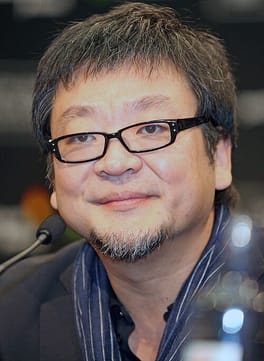
In the town of Kamiichi, in Toyama Prefecture, surrounded by mountains and clear air, a boy grew up. In time he made his way into animation and became a director who paints the most ordinary themes, family, summers in the countryside, the online world, on a scale so vast it takes your breath away.
Mamoru Hosoda, born September 19, 1967, long carried the heavy label of "the next Miyazaki," "the next Ghibli." But rather than succeed someone else's legacy, he met that pressure head-on, founded his own Studio Chizu, and chose to walk his own path.
From Oil Painting to Toei Animation
Hosoda majored in oil painting in the fine arts department of Kanazawa College of Art. The sensibility born of painting lives on, unmistakably, in the luminous color and skies of his later films.
In 1991 he joined Toei Animation and began his career as an animator. Patiently honing his craft as a director, he made his feature film debut in 1999 with Digimon Adventure: The Movie. In 2005 he directed One Piece: Baron Omatsuri and the Secret Island, bringing his own distinctive vision even to an established hit franchise.
The Leap as a Freelancer
After leaving Toei in 2005 to go freelance, Hosoda's first film was The Girl Who Leapt Through Time, released in 2006. A fresh, vivid portrait of youthful sparkle and the bittersweetness of time, it won Outstanding Animation of the Year at the 30th Japan Academy Film Prize and a Special Prize in the feature category at the Annecy International Animated Film Festival, lifting his name overnight.
His 2009 follow-up, Summer Wars, wove together a sprawling family gathering in the countryside and a crisis in a vast virtual world into a single story, becoming a major hit at home and abroad. He set it in Ueda, Nagano, his wife's hometown. Shown such universal themes, family and the online world, on so grand a scale, audiences wept.
Studio Chizu, and the World
In 2011, Hosoda founded his own animation production company, Studio Chizu. His answer to being called "the next Ghibli" was not to follow in anyone's footsteps, but to build a home base of his own.
He continued to dig into the themes of family and growing up with Wolf Children in 2012 and The Boy and the Beast in 2015. His 2018 film Mirai was an official selection for Directors' Fortnight at Cannes and, in a landmark achievement, became the first non-Studio Ghibli Japanese animated film to be nominated for the Academy Award for Best Animated Feature at the 91st Academy Awards. His 2021 film Belle was selected for the Cannes Première section, proof that his work was reaching the world.
Humanity Within the Grand Scale
A devoted reader of Kenzaburo Oe and Shuji Terayama, and a lover of film, Hosoda makes work of grand scale yet reveals a strangely endearing human side. He has said, for instance, that the food he dislikes is onion rings, a disarmingly down-to-earth detail from a director within reach of the world's top prizes.
Married to a private individual in 2007 and a father of two, family has remained a central theme of his work. The way he paints those clear blue skies, as if the mountains and air of rural Toyama had soaked directly into the screen, is a treasure that is his alone, beyond imitation.
He shouldered the pressure yet never walked a borrowed road. Not as anyone's successor, but as the singular artist Mamoru Hosoda, he has kept unfolding his own map.
There are not many directors who make you wonder, with each new film, "what kind of world will he hand me this time?" Family, the countryside, and the texture of our own lives, he will surely keep painting them, there beneath that clear, open sky.