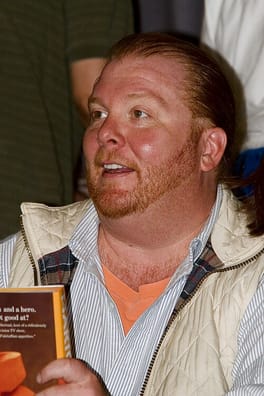
Photo: Charles Haynes / CC BY-SA 2.0 (source: Wikimedia Commons)
Mario Batali is a restaurateur, cook and writer. Mario Batali was born on September 19, 1960 in Seattle, Washington, United States. That works out to 66 years old in 2026. Schooling on record includes Rutgers University.
My Take
Mario Batali is a complicated figure, but his impact on American dining is undeniable. From Seattle and Rutgers to building Babbo into a Michelin-starred New York institution, plus Del Posto, Lupa, and The Spotted Pig, he did not just cook plates, he shaped a city's food culture. What strikes me most is that he was as much a builder of spaces and experiences as he was a chef, a true media-era restaurateur. His later years brought serious controversy, and that belongs in the record. Still, the sheer drive and his role in rooting Italian cuisine in America remain part of his story too.
This take was written by generative AI, one per person, from publicly reported facts (editorial policy). It is a reading of the record, not reporting.
1. Profile
- Name (English)
- Mario Batali
- Name (Japanese)
- マリオ・バターリ
- Reading
- まりお・ばたーり
- Born
- September 19, 1960 (age 66)
- Origin
- Seattle, Washington, United States
- Occupation
- restaurateur / cook / writer / media personality
- Zodiac / Chinese zodiac
- Virgo / Rat
2. Background
- University
- Rutgers University
3. Links
- Official sitehttps://www.mariobatali.com/
- Xhttps://x.com/Mariobatali
- Wikipedia (English)https://en.wikipedia.org/wiki/Mario%20Batali
- Wikipedia (Japanese)https://ja.wikipedia.org/wiki/%E3%83%9E%E3%83%AA%E3%82%AA%E3%83%BB%E3%83%90%E3%82%BF%E3%83%BC%E3%83%AA
- Wikidatahttps://www.wikidata.org/wiki/Q2640705
4. About this entry
Tags
- Last updated
Facts are limited to publicly available information up to 2024; non-public or unconfirmed items are omitted. English text is machine-assisted (facts translated by Sonnet, "My Take" written by Opus 4.8). The Japanese page is the source of record.
Frequently asked questions
When was Mario Batali born?
Born September 19, 1960 (age 66).
Where is Mario Batali from?
Mario Batali is from Seattle, Washington, United States.
What does Mario Batali do?
Mario Batali works as restaurateur, cook, writer, media personality.
Restaurateur — see all → · Cook — see all → · More people from the United States →