The Man from Nagasaki Who Hoarded the Talent: Masaharu Fukuyama, a One-Person Art Form
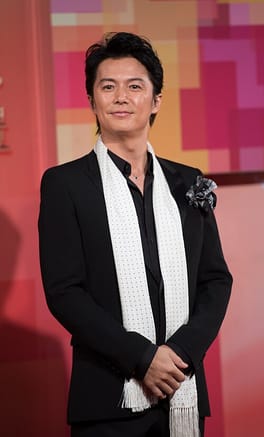
Let him sing, and that low, sweet voice tightens around your chest. Put him in a drama, and he carries it as the lead and turns it into a hit. Hand him a camera, and he leaves behind real work as a photographer. Sit him in front of a late-night microphone, and he will talk for hours. Try to sum up Masaharu Fukuyama in a single phrase, and you almost always run out of words.
A young man born in Nagasaki built a career that captured song, acting, photography, and the spoken word, all on the strength of his own two hands. His path is so lavish it can make you genuinely wish he would share some of that talent around.
And somehow, past the age of fifty, he keeps getting more handsome. That, frankly, is a mystery.
Two Debuts That Began with an Audition
Masaharu Fukuyama was born on February 6, 1969, in Nagasaki City, Nagasaki Prefecture. He attended Nagasaki Municipal Inasa Elementary School and Fuchi Junior High School before going on to Nagasaki Prefectural Nagasaki Technical High School. He did not attend university. His was a life carved out not by academic credentials but by his own expression.
The turning point came in 1988, when he passed Amuse's "10 Movies" audition. He made his film debut that year and joined Amuse, then in 1990 launched his music career with the single "Tsuioku no Ame no Naka." Both faces, actor and musician, began in the same place.
That same year, 1990, he also began his own radio program, starting a parallel career as a radio personality. The seeds of his many talents, it turns out, were all sown at the very beginning.
"Sakurazaka" and "Masha": Becoming a National Artist
In 1993, he played Tatsuya Kashiwagi in the Fuji TV drama Under One Roof, drawing wide attention as an actor. But what truly cemented his name in the national consciousness was, after all, his music.
In 2000, the single "Sakurazaka," for which he wrote the lyrics, composed the music, and sang, achieved double-million sales. Songs spun from his own words and melodies, like "HELLO" and "IT'S ONLY LOVE," became hit after hit. What matters is that he reached the summit not with songs handed to him, but with songs he created himself.
Affectionately nicknamed "Masha" by his fans, he made his standing as a singer-songwriter unshakable.
Becoming Ryoma, Becoming Yukawa: The Depth of Fukuyama the Actor
As an actor, Masaharu Fukuyama moves freely between two completely different faces. In the 2007 Fuji TV drama Galileo, he played the cerebral, breezily detached physicist Manabu Yukawa, and the series became a major hit. That role carried all the way to the 2022 film Penance, which earned him the Hochi Film Award for Best Actor.
On the other hand, in the 2010 NHK Taiga drama Ryomaden, he starred as Sakamoto Ryoma. His portrayal was praised as looking like Ryoma and no one else, and won him an Individual Award at the 48th Galaxy Awards in the television division.
Then, in 2013, he played Ryota Nonomiya in director Hirokazu Kore-eda's film Like Father, Like Son. The film won the Jury Prize at the Cannes International Film Festival, and Fukuyama himself took home the Japan Academy Prize for Outstanding Performance by an Actor in a Leading Role, among numerous other best-actor honors. Here, his standing as a genuine actor, not a singer dabbling on the side, was firmly established.
Past Thirty Years, and Still Getting More Handsome
On September 28, 2015, Masaharu Fukuyama married actress Kazue Fukiishi. It is said that countless fans across Japan fell into a collective heartbreak at the news. That a single marriage announcement could become a social phenomenon shows just how deeply he was loved. The following year, in 2016, his first child was born (details kept private).
In 2020, he released the original album AKIRA to mark his 30th debut anniversary, and it debuted at No. 1 on the Oricon weekly album chart. Thirty years on from his debut, he keeps delivering results at the very front line.
Song, acting, photography, and even hobbies like the tea ceremony and guitar, his repertoire never seems to run dry. The way he grows more handsome as the years pass has become something close to a phenomenon in itself.
He stood at the summit as a singer-songwriter, starred as a Taiga drama lead and in a Cannes-winning film as an actor, and even holds the title of photographer. While carrying all that talent alone, Masaharu Fukuyama bears it lightly, with an almost breezy detachment.
A man who came out of Nagasaki and got this far on the strength of his own hands. His journey makes you want to applaud, plainly and sincerely. He may look like someone hoarding all the talent, but in truth, through his songs and his performances, he may be sharing it with us, generously, all along.