From Child Actor to Master and Director: The Lifelong Craft of Masahiko Tsugawa
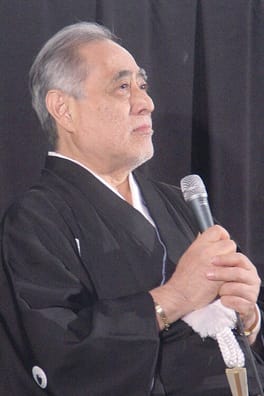
An actor opens the curtain on his life as a child, stands before the screen for more than half a century, and finally takes up the megaphone as a director himself. Stories like that are no longer easy to come by.
Masahiko Tsugawa was born in Kyoto on January 2, 1940, and died on August 4, 2018, at the age of seventy-eight. The range that let him play the polished leading man and the gleefully hateable villain with equal conviction is not something acquired overnight. His was the life of a true actor, one who grew up alongside the craft and grew old within it.
Born in Kyoto: Beginning as a Child Actor
He was born in Kyoto in 1940 to the actor Kunitarō Sawamura and the actress Tomoko Makino; his grandfather was the film director Shōzō Makino and his elder brother the actor Hiroyuki Nagato. He made his debut as a child actor in 1945.
Spending one's childhood in the peculiar space of a film set becomes an asset no one else can imitate. You learn acting not through theory but through the body; standing before a camera becomes ordinary life. At the root of Tsugawa's craft lay the quiet accumulation of those early days.
Leading Man and Villain: An Extraordinary Range
His greatest appeal was the sheer breadth of his acting. Cast as a refined leading man, he could make audiences fall for him; turned into a villain, he became a man so smugly hateable that you wanted to boo him on sight. And somehow both felt completely lived-in.
The number of registers an actor can reach is proof of long experience. Performers who refuse to be boxed into one type, who can move freely across roles of wildly different shades, are rare. Tsugawa was one of those rare few, valued for decades on the stages of Japanese film and television.
More Than an Actor: The Critic's Voice
Tsugawa did not wear the face of an actor alone. On television he was also known as a commentator, a man happy to speak his mind bluntly about the affairs of the day.
To hold opinions and voice them without hiding behind anyone is its own kind of candor, and it tells you he was never merely "an actor." He understood the subtleties of performance from the inside, yet he also carried the perspective of someone who could discuss things from without. That many-sided intelligence gave his persona its depth.
Work the Nation Recognized: Medals and Honors
His path was accompanied by real recognition. In 1982 he won the Blue Ribbon Award for Best Supporting Actor, and he was also honored with the Golden Arrow Award.
Then in 2006 came the Medal with Purple Ribbon, and in 2014 the Order of the Rising Sun, Gold Rays with Rosette. These honors are different from fleeting popularity. They are the quiet token of respect a nation extends only to those who have honestly stacked up good work over long years. That his life was worthy of such respect, these decorations softly attest.
A life devoted wholly to the craft, beginning as a child actor, ripening into a master, and reaching all the way to the director's chair. When he left this world in 2018 at seventy-eight, Japan lost an irreplaceable grown-up actor.
A performer of straight-backed integrity, combining grace with genuine menace. Such figures may grow rarer with every passing year. Which is precisely why the work Masahiko Tsugawa left behind will go on being told for a long time to come.