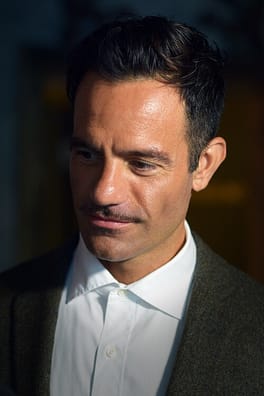
Photo: Philip Romano / CC BY-SA 4.0 (source: Wikimedia Commons)
Ramin Karimloo was born on September 19, 1978 in Tehran, Tehran Province, Iran and is credited as a stage actor, composer and record producer. As of 2026, Ramin Karimloo is 48 years old. Schooling on record includes Alexander Mackenzie High School. Listed accolades include Theatre World Award (2014). Credited works include The Phantom of the Opera.
My Take
Ramin Karimloo is one of those performers who makes you genuinely believe in the power of musical theatre — born in Tehran, raised in Canada, and somehow destined for the grandest stages in the world. His run as the Phantom on the West End is the stuff of legend: that voice has a brooding, almost operatic weight to it that very few actors can pull off without it feeling cartoonish, and he absolutely nails it. What I love most, though, is that he's not a one-trick pony — playing Jean Valjean in Les Misérables and landing a Theatre World Award in 2014 for his Broadway work shows real range. He's the kind of artist who quietly earns your respect by just doing the work at an insanely high level, night after night.
This take was written by generative AI, one per person, from publicly reported facts (editorial policy). It is a reading of the record, not reporting.
1. Profile
- Name (English)
- Ramin Karimloo
- Name (Japanese)
- ラミン・カリムルー
- Reading
- らみん・かりむるー
- Born
- September 19, 1978 (age 48)
- Origin
- Tehran, Tehran Province, Iran
- Occupation
- actor / stage actor / composer / record producer / opera singer
- Zodiac / Chinese zodiac
- Virgo / Horse
2. Background
- High school
- Alexander Mackenzie High School
Awards & achievements
- 2014 Theatre World Award
3. Works & records
Filmography / notable works
| Category | Title |
|---|---|
| Notable work | The Phantom of the Opera |
4. Links
- Official sitehttps://www.raminkarimloo.com/
- Instagramhttps://www.instagram.com/raminkarimloo/
- Xhttps://x.com/raminkarimloo
- Wikipedia (English)https://en.wikipedia.org/wiki/Ramin%20Karimloo
- Wikipedia (Japanese)https://ja.wikipedia.org/wiki/%E3%83%A9%E3%83%9F%E3%83%B3%E3%83%BB%E3%82%AB%E3%83%AA%E3%83%A0%E3%83%AB%E3%83%BC
- Wikidatahttps://www.wikidata.org/wiki/Q519811
5. About this entry
Tags
- Last updated
Only publicly available facts are listed; non-public or unconfirmed items are omitted. Base data was compiled from Wikidata from June 2026 onward; ages are recalculated daily and deaths are checked against Wikidata on an ongoing basis. English text is machine-assisted (facts translated by Sonnet, "My Take" written by Opus 4.8). The Japanese page is the source of record.
Frequently asked questions
When was Ramin Karimloo born?
Ramin Karimloo was born on September 19, 1978 and is 48 years old.
Where is Ramin Karimloo from?
Ramin Karimloo is from Tehran, Tehran Province, Iran.
What does Ramin Karimloo do?
Ramin Karimloo works as actor, stage actor, composer, record producer, opera singer.
Which high school did Ramin Karimloo attend?
Ramin Karimloo attended Alexander Mackenzie High School.
What is Ramin Karimloo known for?
Ramin Karimloo's notable works include The Phantom of the Opera.
Actor — see all → · Stage actor — see all → · More people from Iran → · More people born on September 19 →