From Rehouse Girl to Japan's Most Decorated Actress: Rie Miyazawa and the Talent of Range
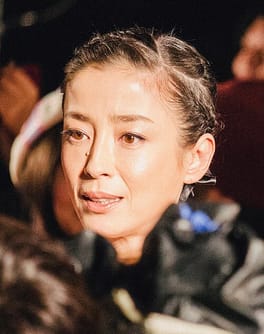
A Japanese-Dutch Girl Born in Nerima
Her father was Dutch, her mother Japanese. Her parents divorced when she was young, and she is said to have had no contact with her father. She attended Oizumigakuen Midori Elementary and Oizumigakuen Junior High in Nerima, and did not go on to high school or university.
She began her career as a model around 1984, then stepped fully into the entertainment world in 1985 with a Myojo Foods Charumera commercial. In 1987, her role as Shiratori Reiko in the Mitsui Real Estate campaign made her the face of an era.
A foreign-tinged glamour alongside a plainspoken, working-class Nerima frankness — this strange coexistence of two sides would remain her greatest weapon for decades to come.
The Peak of Idoldom, and a Social Phenomenon
In 1988 she made her acting debut starring in Our Seven-Day War, and the following year won the New Actor Award at the Japan Academy Prize. Her popularity accelerated, and she became a symbol of her time.
In 1992 she announced her engagement to sumo grand champion Takanohana Koji (dissolved the next year). Her 1993 photo book Santa Fe became a genuine social phenomenon, and in 1994 her catchphrase from a Takara Shuzo commercial — "Suttamonda ga arimashita" — won the Grand Prize at the New Words and Popular Phrases Award.
For a few years she stood at the center of the cultural whirlwind. But she did not choose the path of being consumed by that frenzy and fading away.
Reaching the Summit Through Acting
In 2002 she starred in Yoji Yamada's The Twilight Samurai, and in 2003 won her first Japan Academy Prize for Outstanding Performance by an Actress in a Leading Role. Hiroyuki Sanada won Best Actor for the same film, placing their names together at the top of that year.
She also took Best Actress at the 2002 Moscow International Film Festival and the Blue Ribbon Award in 2005 for Father and Son. Then, as a bank employee who turns to embezzlement in Pale Moon (2014), and in the story of an unconventional family's bond in A Full Life (2016), she won the Japan Academy Prize for Best Actress a second and third time.
Her performances go past pretty or beautiful and reach in to grab you by the chest. The poise she honed on stage under the great Bando Tamasaburo helped give that work its depth.
Canvas, Wine, and a Whole Person
Off-screen, Rie Miyazawa is just as rich a figure. She paints large-scale works in acrylics, fills pages with pen sketches, and loves books, words, and dictionaries. She enjoys wine, champagne, sake, and shochu, and keeps a wine cellar at home.
In her private life, she married a private citizen in 2009 and gave birth to a daughter, divorcing in 2016. In 2018 she remarried actor Gou Morita, who took the Miyazawa family name. In 2014 she lost her mother, Mitsuko.
She favors a home-style gyudon passed down from her grandfather, simmered with no water using the essence drawn from onions — small details of the real person that, now and then, feel continuous with her presence on the silver screen.
A girl who could easily have been consumed as an idol instead climbed, through her acting, to the very top of Japanese cinema. That sheer range may be the greatest talent Rie Miyazawa possesses.
She is an actress who only deepens with age. Simply being alive in the same era to watch her work feels, in itself, like a kind of luck — the mark of a truly rare performer.