The Man Who Blew Through the Ceiling at 24: Ryu Murakami, the Other Murakami With a Bomb in His Hands
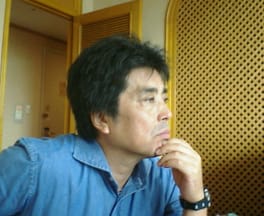
There are a few familiar ways a writer arrives. Some break through after years in the wilderness; others are polished into shape by patient editors. Ryu Murakami fit none of these molds. In 1976, a 24-year-old art student wrote a single novel that won both the Gunzo New Writers Prize and the Akutagawa Prize at once. Its title was Almost Transparent Blue. A sensory, plotless plunge into a world of drugs, sex, and violence in a town shadowed by an American military base, it sparked fierce debate and sold over one million copies.
For most people, that would be a lifetime's luck spent in one stroke. For Murakami, it was only the beginning. Across novels, films, and television, he never stood in the same place twice. This is the story of how a boy from a base town in Nagasaki redrew the map of Japanese literature.
The Akutagawa Winner From a Base Town
Murakami was born in 1952 in Sasebo, Nagasaki, a city built around a United States naval base. That atmosphere became the bedrock of his fictional world. After graduating from Sasebo Kita High School, he entered Musashino Art University, though he later withdrew.
It was during those university years that he wrote Almost Transparent Blue. Set in a base town and rendered through raw, sensory description rather than conventional narrative, the novel rattled the literary establishment. Critics split sharply between hailing it as the voice of a new generation and dismissing it as mere subculture, but the Akutagawa Prize was his. A 24-year-old newcomer had landed, in a single leap, at the summit of Japanese letters.
A Novelist Who Changed Shape Every Time
Murakami's true brilliance lies in what came next: his refusal to repeat himself. Coin Locker Babies (1980), which won the Noma Literary New Face Prize, told the mythic, sprawling story of two boys abandoned in coin lockers, a world away in tone from his debut.
He never slowed. In 1987 he released both the coming-of-age novel 69 Sixty Nine and the vast political epic Ai to Genso no Fascism (Fascism of Love and Fantasy) in the same period. In the Miso Soup (1997) earned the Yomiuri Literary Prize; Kyoseichuu (2000) the Tanizaki Prize; and his monumental Peninsula (2005), imagining an invasion of Japan by North Korea, won both the Noma Literary Prize and the Mainichi Publishing Culture Award. Prize after prize, each for a different kind of book: the sheer range is staggering.
Setting Down the Pen, Picking Up the Camera
Murakami was not content to hand his stories to others. In 1979 he adapted his debut into a film, writing and directing it himself, an unusual move for an author of his era.
In 1992 he released Topaz (Tokyo Decadence), and in 1996 he made KYOKO. The drive to translate the worlds he had built in words directly into images proves he was never merely a writer who happened to publish books.
The Other Face on Cambria Palace
Then, in 2006, he revealed yet another self: host of TV Tokyo's business program Nikkei Special: Cambria Palace. Week after week, he sat across from corporate executives, drawing out their stories with a calm, easy smile.
It is hard to believe that the author of those feral, unsettling novels and this congenial interviewer are the same man. Yet a single thread surely runs through both: a loathing of boredom and an inexhaustible curiosity about the real texture of the world. Whether in fiction, film, or a conversation with a CEO, that hunger has always driven him.
Japan has two writers named Murakami. In the shadow of the globally famous other, Ryu Murakami has quietly carried a bomb all along, changing genre and temperature with every work, breaking out of the novel and into film and television. His career is the slow, decades-long reinvention of the force he unleashed at his debut.
The young man who blew through the ceiling at 24 spent the rest of his life proving there was no ceiling to begin with. Behind that calm smile, something is still rigged to go off. Read him with that in mind, and Ryu Murakami becomes a writer you can never quite let your guard down around.