The Man Who Earned the Name "Mister": How Shigeo Nagashima Lit the Fire of Japanese Baseball
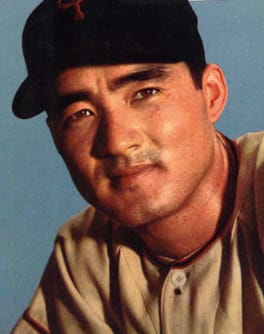
In the world of Japanese baseball, there is one figure you can summon without a name at all. Just say "Mister," and everyone knows. Shigeo Nagashima. The numbers are great, of course, but his real genius lived outside the numbers.
He fielded routine grounders as if they were duels, lost his helmet on a wild swing, and made the stadium roar even when he struck out. No player understood better, in his very body, that baseball was not merely a contest but a performance.
Born in rural Chiba in 1936, a single boy would grow to stand at the center of a national pastime and end his journey holding the Order of Culture. This is the arc worth tracing again.
A Boy from Chiba Who Found His Light at Rikkyo
Shigeo Nagashima was born on February 20, 1936, in Usui-machi, Inba District, Chiba Prefecture, today's Sakura City. From a provincial high school he went on to the Faculty of Economics at Rikkyo University, where he made his name in the famous Tokyo Big6 Baseball League.
There was no draft system back then; players signed directly with clubs. Recognized for his Rikkyo exploits, Nagashima joined the Yomiuri Giants in 1958. What scouts fell for was not only his hitting talent. It was his flair, his magnetism, that undeniable presence in every move he made.
A Star from His Very First Day
Most rookies serve years of apprenticeship before they arrive. Nagashima did not. In his debut 1958 season he took both the Central League Rookie of the Year and the RBI title in one stroke. By 1961 he was named league Most Valuable Player for the first time.
Even on defense at third base he played to the crowd. He would field a tricky ball in a way that made it look even trickier. He twisted his body on a strikeout so that even the miss became a picture. Calculation or instinct, only he could say. But that showmanship pulled millions watching at home into the heat of the ballpark.
The ON Cannon and V9: At the Center of a Golden Age
You cannot tell Nagashima's story without Sadaharu Oh and their fearsome "ON Cannon." The flashy Nagashima and the quiet, relentless Oh, opposites in temperament and batting style, formed a lineup that was a nightmare for opposing pitchers.
The Giants' V9, nine consecutive Japan Series championships beginning in 1965, an unmatched feat, was built around these two men. Nagashima was no mere crowd-pleaser; he was the core of a team that simply kept winning. Flair and substance both, and that is why he could become "Mister."
Immortal Forever: The Legendary Farewell
October 14, 1974, at Korakuen Stadium. Taking the microphone for his retirement speech, Nagashima declared: "My Yomiuri Giants are immortal forever." Even with a script, those are hard words to say. Yet when he said them, they landed not as theatrical bluster but as a genuine proclamation etched into history.
He became manager in 1975, leading the team across a first tenure and then a second beginning in 1993. His coaching and commentary, full of onomatopoeia about the ball coming "whoosh" so you swing "whack," were all the more endearing because he delivered them in complete earnestness.
Fallen, and Still Standing
After becoming Honorary Manager for Life in 2001, Nagashima faced an unexpected trial in 2004. Just after being appointed manager of Japan's national team for the Athens Olympics, he suffered a cerebral infarction that March. From then on he would face long years of rehabilitation.
Still, the public never forgot him. In 2013 he received the People's Honor Award alongside his protege Hideki Matsui. And in 2021 he was awarded the Order of Culture, the first person from the baseball world ever to receive it. It was the moment one player's path was recognized by the nation as culture itself.
Few people fit the phrase "remembered, not merely recorded" so perfectly. Shigeo Nagashima lifted baseball from contest to entertainment, and from entertainment to culture.
That we can casually enjoy professional baseball today is simply because the fire that number 3 lit in the stadium half a century ago still burns, undimmed.