Designed to Make You Smile: Shigeru Miyamoto and the Playfulness He Never Let Go
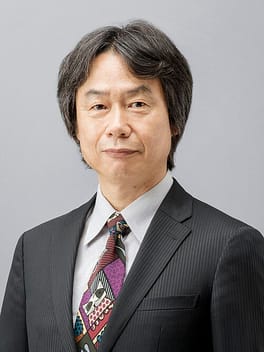
There is a man people call "the god of games." Children across the world picked up controllers, dove into green pipes, and stepped sword-in-hand into dark caverns. The person who designed those doorways was an industrial designer born in a small town in Kyoto.
Shigeru Miyamoto was born in 1952 in Sonobe, Funai District, Kyoto Prefecture (now Nantan City). He did not join Nintendo to make games. He studied industrial design at Kanazawa College of Art and joined the company in 1977 as a young man who simply hoped he might get to draw for a living. Yet somewhere along the way he created Mario, Zelda, and Pikmin, and rewrote the grammar of the video game medium itself.
His starting point and his destination were the same single question: how do you make the player smile?
A Path That Began in Industrial Design
Miyamoto joined Nintendo in 1977. At the time, Nintendo still made playing cards and toys, and no one imagined it would become a video game giant. His title was industrial designer, the person who shapes how a product looks and feels.
The turning point came in 1981, when he was given the chance to design and direct the arcade game Donkey Kong. A giant ape hurling barrels, a captured woman, and a small man rushing to save her — built around this character who would later become Mario, Miyamoto introduced a clear narrative into games for the first time. In a medium that had been about nothing more than scoring points, a doorway to story swung open.
The Plumber and the Swordsman Who Changed the World
In 1985 came Super Mario Bros., directed by Miyamoto. It sold over 40 million copies worldwide and turned the side-scrolling action game into a global standard. The pipes, the mushrooms, the pure joy of a jump — all of it came from relentlessly chasing the feeling of "this is satisfying to touch."
The following year, 1986, he released The Legend of Zelda. Players roamed a vast world freely, solved puzzles, and slowly grew stronger. As a pioneer of the action-RPG, it too became a major hit. Mario and Zelda — two masterpieces of completely different character — Miyamoto produced them almost side by side.
Games Born From Everyday Life
Miyamoto's ideas always came from his own daily life. He played guitar, skied, and drew. He tended his garden and spent time with his dog. Those personal sparks of delight transformed directly into software.
Gardening and a love of observing nature gave rise to Pikmin in 2001. Time spent with his dog became Nintendogs in 2005. In the Wii era, he turned the fun of moving your body into Wii Sports and an interest in health into Wii Fit. Sensations everyone else overlooked, he scooped up and reshaped into play — just as he once said: "A good idea solves multiple problems at once."
Still, Even After Being Called a God
Acclaim poured in from around the world. In 2007 he received the GDC Lifetime Achievement Award; in 2010, the BAFTA Fellowship, only the third in game industry history and the first from Asia. In 2012 he became the first person from the game industry to win the Prince of Asturias Award. And in 2019, he was designated a Person of Cultural Merit — the first person from the game industry ever to receive the honor.
He walked the path of an executive too. He became Executive Vice President in 2002, then Creative Fellow in 2015 after the sudden death of his close colleague President Satoru Iwata, and Representative Director Fellow the following year. Even as he came to help steer the company, he remained a creator. For 2023's The Super Mario Bros. Movie he served as producer, sending the characters he had created back out into the world once more.
For all these honors, there is one thing Shigeru Miyamoto never let go of: playfulness. Decades at the very top, and the question he still ponders with a straight face is simply this — how do you make the player smile?
A young man who joined as an industrial designer ended up carving "memories of fun" into lives all over the world. That purity, perhaps, is the real reason they call him the god of games.