The Comeback Premier: Shinzō Abe and the Era He Carried
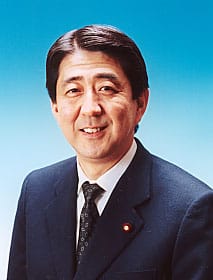
In politics, very few people manage to step down from the summit and then climb all the way back. Shinzō Abe was one of those rare few.
Born on September 21, 1954, in Shinjuku, Tokyo, Abe would come to be remembered as the longest-serving prime minister in Japan's postwar history. But his path was anything but a straight line. The most dramatic part of his story is precisely that he forced open a door that had seemingly closed behind him, and walked back through it.
And on July 8, 2022, he was struck down by an assassin's bullet while giving a public speech in Nara, an ending nobody wanted that stamped his name even more heavily into history.
Starting Out at Seikei
Abe studied at Seikei Junior and Senior High School before going on to Seikei University. Before he stood on the glittering national stage, he was simply a young man living out an ordinary student life.
Yet the question he would eventually shoulder, how to envision the shape of a nation, became the steady core running through his later words and actions. Those school years laid the first foundation for that core.
A Door That Closed Once
Abe stepped down as prime minister in 2007. For a moment, many people assumed this was the end of the road for him. In the world of politics, it is rarely easy for someone who has left center stage to return to it.
But he overturned that conventional wisdom. In 2012, Abe returned to the office of prime minister. A man who had resigned, now mounting the stage a second time. This comeback says more about his resilience as a politician than almost anything else.
The Longest Tenure
His second term lasted a long time. As a result, Shinzō Abe became the longest-serving prime minister in Japan's postwar history.
That extended tenure shaped an entire era. There was, of course, disagreement. Debates over his policies and his stance continue to this day. But the simple fact that he carried an era on his shoulders is something no one can take away.
Closing the Distance on the World Stage
You cannot talk about Abe without his distinctive style on the diplomatic stage. Shaking hands with world leaders, playing rounds of golf together, finding an easy rapport even with figures known to be hard to get close to, it almost looked like a warm, sociable way of closing the distance.
How that approach was received internationally can be glimpsed in the many honors bestowed on him: the Grand Cross of the Order of Isabella the Catholic in 2017, the Order of the Oriental Republic of Uruguay in 2018, and the Philippines' Order of Sikatuna. He was also named to TIME magazine's list of the 100 most influential people in the world twice, in 2014 and 2018.
Toward a Beautiful Country
Abe was not only a politician but also someone who put his convictions into words and left them behind. In his book "Toward a Beautiful Country," he candidly laid out the kind of nation he envisioned.
Whether or not one agreed with it, there was a clear, principled argument there: "This is the kind of country I believe in." Having twice won the Best Dresser Award in the politics and economics category, he carried a certain presence in how he stood as well, but his essence lay in being a politician who spoke his beliefs without flinching.
On July 8, 2022, Shinzō Abe was struck down by gunfire in the middle of a public speech in Nara. It was a sudden, brutally violent end, the kind nobody wanted, and one that still aches in many hearts.
A politician who stepped down, rose again, and carried an entire era along with the record for the longest postwar tenure. Bearing all the praise and all the criticism, Shinzō Abe was unmistakably at the center of that era. The mark he left, like it or not, will be told and retold for a long time to come.