One Win for Nine Losses: How a Menswear Shop in Ube Became Tadashi Yanai's Global Empire
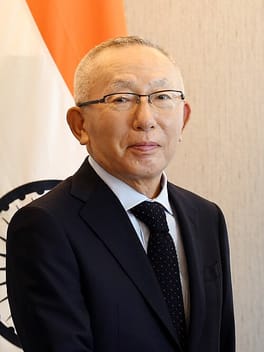
Ube, a quiet provincial city facing the Seto Inland Sea in Yamaguchi Prefecture. It was here that a young man took over the small menswear shop his father ran. The year was 1972. After graduating from Waseda University, he had briefly joined the retailer JUSCO, only to quit after about nine months and return home at the age of twenty-three. His name was Tadashi Yanai.
Half a century later, it is harder to land in a major city anywhere in the world and not see a Uniqlo sign. When winter comes, people pull on HeatTech base layers without a second thought and stroll through town in their fleece jackets. From a single provincial shop to one of the largest apparel empires on earth: what kind of mind made that leap possible?
Part of the answer is distilled into a phrase he has made his own: One Win, Nine Losses.
Inheriting the family shop
Tadashi Yanai was born on February 7, 1949, in Ube, Yamaguchi. He attended Ube High School locally, then studied at Waseda University's Department of Economics, graduating in 1971. His first job was at JUSCO, today's Aeon Retail, but life inside a large organization apparently did not suit him; he left after roughly nine months.
In 1972 he joined Ogori Shoji, the company his father ran. Taking over the family business was, on its face, a modest and conventional choice. Yet this little menswear shop in Ube would become the starting point of a giant company that would one day take on the world. How clearly the young Yanai foresaw that future, no one can say.
The Unique Clothing Warehouse gamble
The turning point came in 1984. Yanai became president of Ogori Shoji, and that same year he opened his first store in Hiroshima. Its name was Unique Clothing Warehouse. The abbreviated form of that name would soon be known worldwide: Uniqlo.
Clothes were stacked like a warehouse, and customers picked through them freely, self-service style. It was a radically different concept from the traditional menswear shop. In 1991 he renamed the company Fast Retailing, steering it away from formal menswear toward casual clothing. A venture born in the provinces had vaulted, almost overnight, onto the national stage.
A philosophy of failure
No account of Yanai's management is complete without his refusal to fear failure. More than that, he assumes it. One phrase says it all: One Win, Nine Losses. You can stumble nine times, so long as you land one big hit. There are as many failures as there are attempts, and victory can only grow out of those failures.
While most executives try to bury their mistakes, Yanai turned his into a slogan and wore it with pride. He followed it with Throw Away Success in a Day in 2009, Face Reality in 2012, and A Note for Becoming a Business Leader in 2015, sharing his philosophy without reservation.
The world takes notice
His record is far from a domestic story alone. He was named Person of the Year at the 2000 Japan PR Awards, made TIME magazine's list of the 100 Most Influential People in the World in 2013, and joined the Asia Game Changers List in 2017. As Japan's wealthiest individual, he is a fixture near the top of the rich lists.
He stepped back to the role of Chairman in 2002, only to return to the front line as Chairman and President in 2005, where he has remained ever since. His elder son Kazumi and younger son Koji both serve as directors of Fast Retailing, and the company is gradually passing to the next generation. And still, the man himself never looks satisfied.
A young man who inherited a small menswear shop in the provinces went on to build a company whose clothes are worn around the world. The path was never a straight line of triumphs. It was a pile of countless failures, and the story of an obstinate will that kept moving forward without fear of them.
Even now, called the richest man in Japan, he wears the expression of someone who still thinks it's nowhere near good enough. That is the bottomless quality of Tadashi Yanai. The everyday comfort of staying warm on a winter morning in a single HeatTech layer rests on the nine losses and one win of a man whose story began in Ube.