"Giants, Taihō, and Tamagoyaki": The Yokozuna Who Stood at the Center of an Era
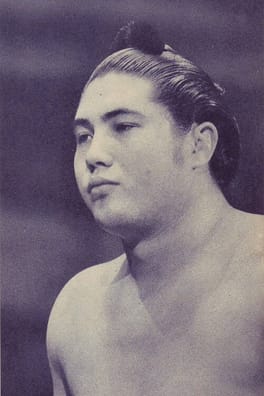
"Giants, Taihō, and tamagoyaki." If you said this old phrase to a young person today, they might wonder why a fried egg sits beside a baseball team and a wrestler. But these three were once shorthand for the things absolutely everyone loved, young and old alike. And in the middle of that phrase stands the name of a single sumo wrestler.
Standing 187 cm tall, he won so overwhelmingly and so consistently that, as people put it, his losses became the news. That man was Taihō Kōki.
This is the story of a yokozuna who became, you might say, nearly synonymous with sumo itself.
A Name Beside a Fried Egg
Taihō Kōki was born on May 29, 1940. Whenever his national popularity is described, one phrase always surfaces: "Giants, Taihō, and tamagoyaki."
To be placed alongside the Giants baseball team and the fried egg that every child wanted in their lunchbox is the clearest proof imaginable that his appeal reached far beyond sumo fans. It crossed every generation and gender, spreading across all of Japan. An athlete spoken of in the same breath as a food and a ball club, as one of the things "everyone loves" — it is a scale of fame that is almost hard to picture.
The Yokozuna Style: Winning Without Brute Force
He was not merely popular. On the dohyō, Taihō was not the type to overpower opponents through sheer strength. He would absorb an attack smoothly and win with poise, never appearing to be in danger. He was the embodiment of what is called "yokozuna sumo."
You could say his strength had grace. Rather than violently shoving opponents down, he won with what looked almost like ease. The techniques delivered from that imposing 187 cm frame were not only powerful but carried a beauty that made spectators fall for him.
The Weight of Being Expected to Win
"His losses became the news" means that victory was simply assumed. Winning drew no attention; only a defeat set the world talking. The pressure of that is extraordinary.
Tournament after tournament, merely winning surprised no one. He bore, in the harshest possible form, the difficulty of doing the expected, again and again. To remain the strongest may have meant standing not in the joy of winning, but in the unrelenting tension of never being allowed to lose.
The People's Honor Award, Granted After Death
Taihō received many honors. In 2004 came the Medal with Purple Ribbon, and in 2009 he was designated a Person of Cultural Merit. He also received the Third-Class Order of Merit of Ukraine.
And after he passed away on January 19, 2013, he was awarded the People's Honor Award. The fact that the nation praised his name even after his death tells us he was no ordinary champion. He possessed both overwhelming strength and a depth of affection to match it — and because of that, people never forgot him.
In both the record books and in memory, Taihō Kōki towers as one of the great yokozuna in the history of the sport. The phrase "Giants, Taihō, and tamagoyaki" has become a watchword that calls back the entire Shōwa era.
That giant back, standing quietly yet overwhelmingly at the center of the ring — there are still many who regret never having seen it in person.