Two Swords Aren't Enough: Beat Takeshi, the Artist of Laughter, Violence, and Silence
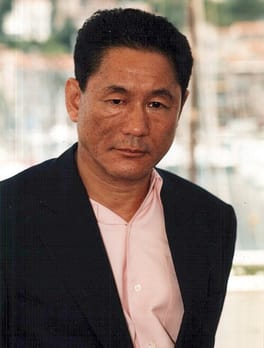
A man raised in Adachi, Tokyo, would roll the whole nation over with laughter through manzai comedy, then pick up a camera and walk off with the Golden Lion at one of the world's great film festivals. His real name is Takeshi Kitano; his stage name is Beat Takeshi. Born on January 18, 1947, he leaves everyone stuck for words when asked to sum him up in a single phrase.
There is "Beat Takeshi," the loudmouth clowning around on variety TV, and there is "Kitano," the director who films dry, sudden violence in near silence. The fact that these two are the same person scrambles the brain no matter how many times you confirm it.
"Two-sword style" doesn't begin to cover it. Comedy, film, painting, writing, music: all of it ends up stamped with the Takeshi mark. This is the story of a man who drove one thick, immovable pillar into the bedrock of Japanese culture.
From Asakusa France-za to the Explosion of Two Beat
Takeshi did not begin under the bright lights of television. Around 1972 he became a comedy apprentice to Senzaburo Fukami at the Asakusa France-za theater, paying his dues in obscurity. It was a youth spent chasing comedy while enrolled in Meiji University's engineering faculty (he would later receive a special graduation certification in 2004).
He went on to form the manzai duo Two Beat with Beat Kiyoshi. Their acid-tongued, satirical comedy exploded in popularity during the manzai boom of the early 1980s, through Fuji TV's THE MANZAI and other programs. He spat venom right at the edge of danger, yet somehow love always lingered at the end. Whether it was calculation or pure instinct, no one could tell.
Becoming "Kitano of the World": The Birth of the Director
In 1989 he made his directing debut with Violent Cop. A comedian taking up the megaphone seemed an unlikely gamble, yet it would soon astonish the world.
Sonatine (1993) was invited to the Un Certain Regard section at Cannes and won acclaim abroad. Then, in 1997, HANA-BI took the Golden Lion at the 54th Venice International Film Festival, cementing his international fame as "Kitano of the World." Dry silences, sudden bursts of violence, and a strange tenderness seeping in between them: a directorial voice utterly unlike the TV "Takeshi" had won the recognition of the world.
Moving Between Comedy and Cinema
The astonishing thing is that even after becoming a world-class director, he never abandoned "Beat Takeshi" on television. He kept hosting shows like Genius Takeshi's TV Show That Gives You Energy!! and Beat Takeshi's TV Tackle while making films with the other hand.
Zatoichi (2003) won the Silver Lion at the 60th Venice International Film Festival. Its celebratory tap-dance finale could only have come from a man who knows both comedy and cinema from the inside. In 2023 he released Kubi, still refusing to set down his creative tools well into his seventies.
The Man Who Never Lets Himself Become Grand
Takeshi's true essence lies in this: for all his achievements, he never settles into the role of a "great man." He was made Commandeur of France's Ordre des Arts et des Lettres in 2010, Officier of the Légion d'honneur in 2016, and received the Order of the Rising Sun, Gold Rays with Rosette in 2018. Honored around the globe, he still wanders off to do reckless, precarious things.
He has written and illustrated a picture book, and he keeps a Shiba Inu named Gon. Even after a motorcycle crash left part of his face paralyzed, he shrugged it off with that famous lopsided grin. It is precisely this refusal to become grand that makes him so trustworthy.
Comedy, film, painting: in the end everything turns into the Takeshi mark, so dense is his authorial signature. Whatever he touches, regardless of genre, becomes unmistakably his.
As a manzai performer he made Japan laugh; as a film director he silenced the world. This monster of countless "swords" drove a single thick pillar into the bedrock of Japanese culture, one no one will ever be able to pull out.