The Man Who Never Stepped Off the Stage: Tatsuya Nakadai's Lifelong Devotion
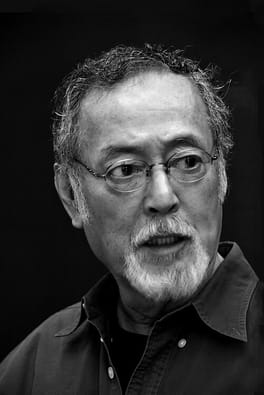
The moment Tatsuya Nakadai appears on screen, the air tightens. One look from those burning, faintly dangerous eyes and you find yourself sitting up straighter, paying attention. It is less performance than sheer presence.
Born in Meguro, Tokyo, in 1932, Nakadai carried postwar Japanese cinema through its golden age on the strength of his own talent. He starred in the masterworks of two titans, Masaki Kobayashi and Akira Kurosawa, and was honored with France's Ordre des Arts et des Lettres and Japan's Order of Culture. Yet the heart of his story is not the count of his accolades. It is his refusal to stop, performing on stage well into his nineties.
This is the record of an actor who lived out the phrase "active for life" in the most literal sense.
It Began With a Friend's Suggestion
Nakadai never went to university. The young man who finished an evening high school course after industrial school was pushed toward acting not by some certainty of his own gift, but by a friend's casual nudge.
In 1952 he entered the Haiyuza Theatre Company's acting school as a fourth-cohort student, studying under Koreya Senda. His first stage role was Oswald in Ibsen's Ghosts. There was no glamorous burst into the spotlight; his career grew out of patient, grinding stage work. His full entry into film would not come until four years later, in 1956.
The Human Condition and Harakiri: The Kobayashi Years
What lifted Nakadai into the ranks of leading men was his collaboration with director Masaki Kobayashi. In the 1959 epic The Human Condition, he played Kaji, a man struggling to remain human against the vast machinery of wartime violence. The harrowing role made the young actor's name.
In 1962's Harakiri, he played a ronin who peels back the hypocrisy of samurai honor and institutional pretense with a quiet, simmering fury. His restraint, his power conveyed through stillness and gaze rather than shouting, became the template for his mature style. In Kurosawa's 1961 Yojimbo he played the pistol-wielding Unosuke, leaving a vivid mark even as a villain.
Kurosawa's Kagemusha and Ran
It was two films with Akira Kurosawa that introduced the mature Nakadai to the world. In 1980's Kagemusha, he carried a dual role: a feudal warlord and the thief who serves as his double. Within the film's grand scale, he portrayed both the illusion of power and the quiet sorrow of a man swallowed by it.
Then came 1985's Ran, a transposition of Shakespeare's King Lear into feudal Japan. As Hidetora Ichimonji, an aging lord who loses everything, Nakadai moved between madness and majesty in a performance now etched into the history of Japanese film. He was, simply, the actor the masters trusted most.
Mumeijuku: A Stubborn Devotion to Teaching
No account of Nakadai is complete without his other face: that of a teacher. In 1975, together with his wife, the actress and director Kyoko Miyazaki, he founded the private acting school Mumeijuku, a place to train nameless young people from the ground up and send them onto the stage.
Many actors emerged from it. While continuing to headline at the top of his profession, he spent half a century raising the next generation. Where most would have decided they had done enough, he did not stop. In 1996 he lost Miyazaki, his partner in the school, to cancer. Yet he chose neither to close the school nor to leave the stage.
A Life of Never Retiring
The Chevalier of the Ordre des Arts et des Lettres in 1992, the Medal with Purple Ribbon in 1996, Person of Cultural Merit in 2007, and finally the Order of Culture in 2015. The honors arrived one after another. But Nakadai's true measure lies not in the weight of these medals, but in the fact that he kept showing up to work after receiving them.
In 2010, in his late seventies, he starred in A Journey with Spring, playing a declining old man with quiet, unsparing honesty. The sight of him still on stage past ninety moves beyond words like charisma or gravitas; it makes you want to sit up straight. He came this far on a single thing: an unquenchable love of acting.
Tatsuya Nakadai's life is a story of talent, but even more it is a story of will. He starred in the masterpieces of the great directors, raised new actors at Mumeijuku, and kept choosing the stage even after losing his partner. Running through all of it is one unwavering intention: to remain an actor.
When those eyes fix on you from the screen, your spine straightens on its own. That Japan had this actor at all feels, in the end, like its own kind of good fortune.